
Lower back pain is one of the most common issues today, especially among people who spend long hours sitting, working at a desk, or using their phone. In many cases, it’s not caused by a serious medical condition, but by everyday habits, poor posture, and lack of movement.
Because of modern lifestyles, this type of discomfort has become increasingly common. Small daily actions, repeated over time, can put constant stress on your lower back without you even noticing it.
The good news is that simple changes in your routine can make a noticeable difference. In this guide, you’ll learn what commonly causes this issue and practical strategies that may help reduce it over time.
Common Causes of Lower Back Pain
One of the most common causes of lower back pain is prolonged sitting. When you stay seated for long periods, especially with poor posture, your lower back muscles remain under constant pressure. Over time, this can lead to stiffness, discomfort, and reduced mobility.
Another key factor is weak core muscles. Your core plays an important role in supporting your spine, and when it’s not strong enough, your lower back compensates. This extra strain can gradually lead to pain and tension.
Lack of movement also contributes to the problem. Staying in the same position for too long reduces blood flow to the muscles and can increase stiffness, making discomfort more noticeable throughout the day.
In many cases, lower back pain is not caused by a serious injury, but by a combination of these everyday factors. Small habits, repeated daily, can slowly build up and create ongoing discomfort without a clear single cause.
Understanding these underlying reasons is the first step to reducing pain and preventing it from coming back.
1. Improve Your Sitting Posture
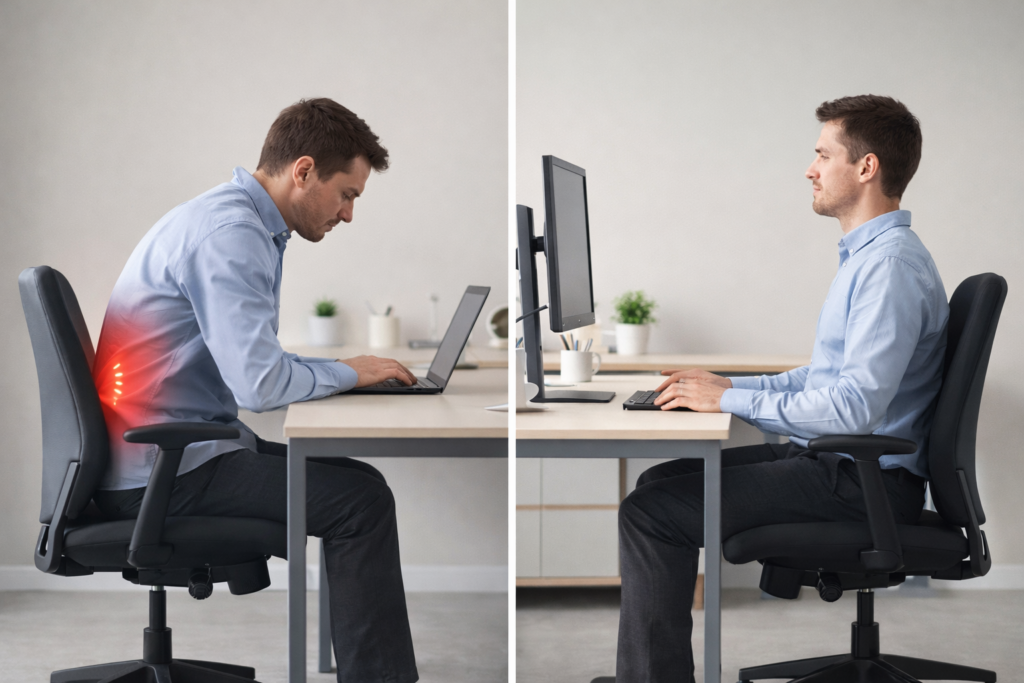
Many people spend hours sitting every day without realizing how much it affects their lower back. Poor posture puts constant pressure on the spine, especially in the lower back area.
Start by keeping your feet flat on the floor and your knees at hip level. Your back should stay straight, with your shoulders relaxed, not rounded forward. Try to keep your screen at eye level so you don’t lean forward or look down for long periods.
It also helps to use a chair that supports your lower back or to place a small cushion behind your lumbar area. This reduces pressure and helps maintain a more natural spine position.
Making small adjustments like these can significantly reduce daily strain on your lower back.
2. Move More Throughout the Day
Many cases of lower back pain are linked to staying in the same position for too long. Even if your posture is good, sitting or standing for extended periods can put stress on your lower back.
Your body is designed to move, and when it doesn’t, muscles become stiff and less flexible. This can increase tension and make discomfort worse over time.
Try to stand up, stretch, or walk for a few minutes every 30 to 60 minutes. Small breaks like these help improve blood flow, reduce stiffness, and keep your muscles active throughout the day.
Simple habits like taking short walks, changing positions, or doing light stretching can make a noticeable difference in how your back feels.
You don’t need intense workouts to see improvements. Consistency is more important than effort. Moving regularly throughout the day can help prevent stiffness from building up and reduce the chances of long-term discomfort.
3. Strengthen Your Core Muscles
Your core muscles play a key role in supporting your spine and maintaining overall stability. When these muscles are weak, your lower back has to work harder to keep your body balanced, which can increase strain and lead to discomfort over time.
The core is not just your abdominal muscles. It also includes deeper muscles that surround and support your spine. When these muscles are not properly activated, everyday movements like sitting, standing, or lifting can place extra pressure on your lower back.
You don’t need intense workouts to start improving your core strength. Simple and controlled exercises can be very effective when done consistently.
For example, planks help activate multiple core muscles at once and improve overall stability. Glute bridges can support your lower back by strengthening the muscles around your hips. Bird-dog exercises are also useful, as they help improve balance and coordination while engaging your core in a controlled way.
It’s important to focus on proper form rather than intensity. Performing exercises slowly and with control ensures that the right muscles are engaged and reduces the risk of adding more strain to your back.
Consistency is key. Even a few minutes of core exercises several times a week can make a noticeable difference over time. As your core becomes stronger, your posture improves, your movements feel more stable, and your lower back is less likely to become overloaded.
4. Stretch Your Hips and Hamstrings
Tight muscles around your hips and hamstrings can have a direct impact on your lower back. When these areas are stiff, they can pull on your pelvis and change your posture, increasing pressure on your lower back.
This is especially common if you spend long hours sitting, as the muscles at the front of your hips can become shortened, while others lose flexibility. Over time, this imbalance can lead to discomfort and reduced mobility.
Gentle stretching can help improve flexibility and reduce tension in these areas. For example, a simple hamstring stretch where you sit and reach toward your toes can help release tightness in the back of your legs. A hip flexor stretch, such as stepping one foot forward and lowering your hips slightly, can help open up the front of your hips.
Even small movements like standing up and lightly stretching your legs during the day can make a difference. The key is to keep the movements controlled and avoid forcing your body into uncomfortable positions.
It’s important to stretch slowly and breathe naturally while doing these movements. With regular practice, improving flexibility in your hips and hamstrings can reduce the load on your lower back and make everyday movements feel easier and more natural.
5. Adjust Your Workspace Setup
Your daily environment plays a big role in how your body feels. If your workspace is not properly set up, it can slowly contribute to lower back pain without you noticing it.
For example, working with a screen that is too low can make you lean forward for long periods, putting extra pressure on your lower back. Sitting on a chair without proper support can also force your spine into an unnatural position.
Making small adjustments can have a big impact. Try to keep your screen at eye level so your head stays in a neutral position. Your feet should be flat on the floor, and your knees should be roughly at hip level.
Using a chair with good lumbar support or adding a small cushion behind your lower back can help maintain a more natural posture throughout the day.
Even simple changes, like adjusting your desk height or moving your screen closer, can reduce unnecessary strain and make your workspace more comfortable over time.
6. Improve Your Sleep Position
The way you sleep can have a direct impact on your lower back. Spending several hours in a poor position during the night can put continuous pressure on your spine and lead to stiffness or discomfort in the morning.
For example, sleeping on your stomach can force your lower back into an unnatural position, increasing strain over time. On the other hand, sleeping on your side with proper support can help keep your spine more aligned.
A simple adjustment that may help is placing a pillow between your knees when sleeping on your side. This can reduce pressure on your lower back and keep your hips more balanced.
If you prefer sleeping on your back, placing a pillow under your knees can help maintain a more natural curve in your spine.
Small changes like these can make a noticeable difference in how your back feels when you wake up, especially if they are maintained consistently.
7. Stay Consistent with Healthy Habits
One of the most important factors when dealing with lower back pain is consistency. Small improvements in posture, movement, and daily habits can make a big difference, but only if they are maintained over time.
It’s common to try a few changes for a short period and then go back to old habits. However, your body responds better to regular, consistent actions rather than occasional effort.
For example, sitting with better posture one day or stretching once in a while is not enough to create lasting results. What really helps is building simple routines that you can follow every day without overthinking it.
This might include taking short breaks during work, doing a few minutes of movement, or being more aware of how you sit and sleep. These small habits, repeated daily, can gradually reduce strain on your lower back and improve how your body feels overall.
Over time, consistency is what turns small changes into long-term improvements.
Key Takeaways
- Lower back pain is often caused by everyday habits such as poor posture and lack of movement.
- Sitting for long periods without breaks can increase stiffness and put extra pressure on your lower back.
- Strengthening your core and improving flexibility can help support your spine and reduce strain.
- Small changes in your workspace and sleep position can make a noticeable difference over time.
- Consistency matters — simple habits practiced regularly are more effective than occasional effort.