
You did everything right. You drank a full glass of water before bed, maybe even kept one on your nightstand. And yet — 3am, or maybe 6am — you wake up with your tongue stuck to the roof of your mouth, lips slightly cracked, and that thick, stale taste that no amount of nightstand water seems to fully wash away.
This is one of the most commonly Googled sleep complaints, and one of the most misunderstood. Most articles will tell you to drink more water. But if you’re already doing that and still waking up parched, more water isn’t the answer. The answer is somewhere else entirely — in how you breathe, how your bedroom is set up, what you took before bed, or what your airway is doing while you sleep.
Let’s get into the actual reasons this happens, why it keeps happening despite hydration, and what you can do that will actually work.

Why You Can Wake Up With a Dry Mouth Even If You Drank Water
Here’s the key thing most people don’t realize: hydration and saliva production are not the same system.
When you drink water, you’re replenishing fluid in your body’s tissues and bloodstream. But saliva — that thin, protective film coating the inside of your mouth — is produced by salivary glands that operate on their own schedule, driven largely by nerve signals, circadian rhythms, and whether your mouth is open or closed.
During sleep, saliva production drops naturally. That’s just biology. Your parasympathetic nervous system (the «rest and digest» side) slows a lot of automatic functions overnight, and saliva secretion is one of them. So waking up with some degree of dryness is normal.
The problem is when you wake up with your mouth so dry it feels like sandpaper, your lips are sticking together, or your tongue feels swollen. That level of morning dryness isn’t just «low saliva.» Something is actively pulling moisture out of your mouth faster than your body can replace it — and that something is rarely fixed by the glass of water you had at midnight.
The real culprits are mechanical and environmental. And they’re usually very fixable.
The Most Common Hidden Causes of Morning Dry Mouth
Most people assume they’re just «not drinking enough.» But if you’ve already ruled that out, here’s where to look instead.
Medications — The Most Underestimated Cause
More than 500 medications list dry mouth (clinically called xerostomia) as a side effect. The list includes antihistamines, antidepressants (especially SSRIs and tricyclics), blood pressure medications (diuretics, beta-blockers), anxiety medications, sleep aids, muscle relaxants, and even some antacids.
If you started a new medication within the last few months and your dry mouth has gotten worse, that timing is probably not a coincidence. The mechanism is fairly direct: many of these drugs block the acetylcholine receptors that stimulate saliva production, essentially putting your salivary glands on pause.
This doesn’t mean you should stop your medication. But it’s worth mentioning to your doctor, because alternatives sometimes exist, or timing adjustments (taking the medication earlier in the day) can reduce the nighttime effect.
Alcohol Before Bed
A glass of wine to wind down feels harmless. But alcohol is a diuretic — it triggers your kidneys to excrete more fluid than you’re actually taking in. It also relaxes the muscles of your throat and upper airway, which increases the chance of mouth breathing and snoring. Both of those things dry out your mouth significantly overnight.
If your dry mouth is worse on nights when you had a drink, that’s your answer.
Caffeine Timing
Caffeine consumed in the afternoon or evening continues working in your system for six to eight hours. Beyond its effect on sleep quality, it mildly suppresses salivary flow and has a mild diuretic effect. Not dramatic, but when layered with other factors, it contributes.
Acid Reflux
This one surprises people. Silent acid reflux — where stomach acid creeps up the esophagus without causing obvious heartburn — can trigger a drying of the mouth and throat overnight. Some people notice a slight burning sensation at the back of the throat when they wake up, or a bitter taste. Others just notice that their throat and mouth feel unusually dry and slightly irritated.
If your dry mouth comes with a sore throat most mornings, reflux is worth considering.
Stress and Cortisol
When your body is under stress, cortisol and adrenaline suppress the parasympathetic system — including salivary gland activity. People going through high-stress periods often notice increased dry mouth, both during the day and especially in the morning. The connection between anxiety and a dry mouth isn’t just psychological; it’s biochemical.
Dry Mouth Patterns & What They Often Mean
Certain dry mouth symptoms tend to follow recognizable patterns. This table helps connect common nighttime symptoms with the most likely underlying causes.
| Symptom Pattern | Most Likely Cause | Often Overlooked Detail |
|---|---|---|
| Dry mouth + snoring most nights | Mouth breathing or airway obstruction | Could be structural, such as a deviated septum |
| Dry mouth + morning sore throat | Reflux or post-nasal drip | Frequently mistaken for simple dehydration |
| Dry mouth worse in winter | Low indoor humidity | Central heating can drop humidity below 30% |
| Dry mouth after sleeping with fan on | Evaporative moisture loss | Fan direction and distance make a difference |
| Waking thirsty around 3–4am | Alcohol effects or sleep apnea arousals | Sleep disruptions often cluster during late REM cycles |
| Dry mouth + fatigue + headache | Poor sleep quality or sleep apnea | Dry mouth alone rarely explains headaches |
| Dry mouth after taking antihistamines | Anticholinergic medication effect | Even “non-drowsy” antihistamines may cause it |
| Dry mouth + thick sticky saliva | Very low humidity or dehydration | Sticky saliva usually means it’s highly concentrated |
Mouth Breathing Changes Everything During Sleep
This is the big one. If you sleep with your mouth open — even just partially, even just some of the time — it explains almost everything.
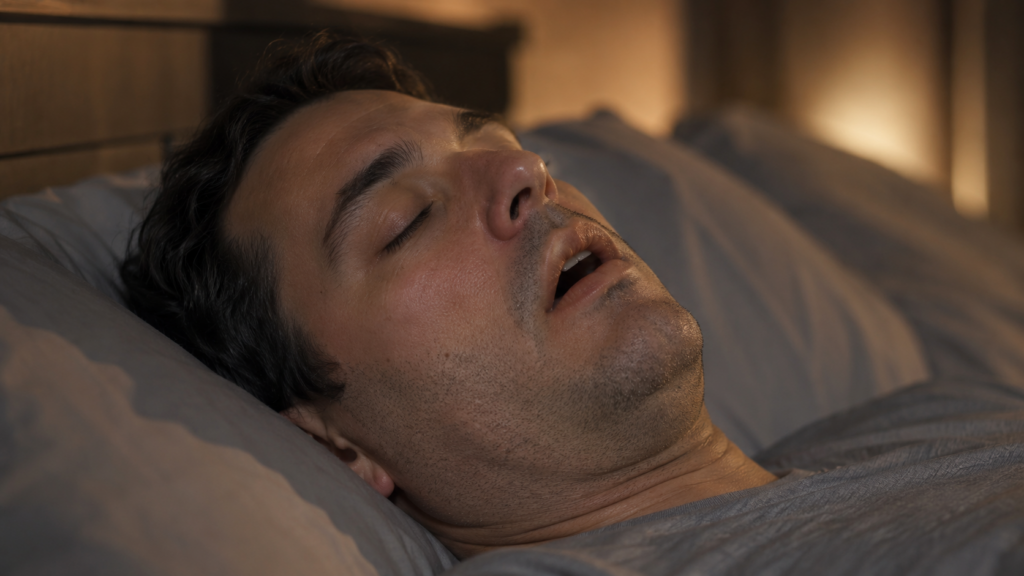
When you breathe through your nose, air is filtered, humidified, and warmed before it reaches your throat. Your nasal passages are lined with mucous membranes specifically designed to add moisture to incoming air.
When you breathe through your mouth, none of that happens. Dry room air flows directly over the surface of your tongue, gums, and the soft tissues of your throat for six to eight hours. The saliva that’s there evaporates. The mucous membranes dry out. And you wake up feeling like you’ve been sleeping in a desert.
The tricky part is that most people who breathe through their mouth during sleep don’t know they’re doing it. They fall asleep breathing normally through their nose, and the transition happens unconsciously as muscles relax and the jaw drops slightly.
Why Nasal Passages Matter More Than You Think
Nasal congestion is one of the most common triggers for switching to mouth breathing during sleep. Seasonal allergies, a mild cold, dust sensitivity, a deviated septum — any of these can partially block airflow enough that your body automatically compensates by opening your mouth.
This is why dry mouth is often worse during allergy season, or after sleeping in a dusty room, or during a cold. The nose isn’t doing its job, so the mouth fills in — and the mouth is terrible at humidifying air.
Sleeping Position and Jaw Relaxation
Sleeping on your back makes this significantly worse. When you’re supine, gravity pulls the jaw slightly downward and the tongue backward, making mouth breathing the path of least resistance. People who sleep on their sides tend to have less mouth breathing, less snoring, and less morning dry mouth.
This isn’t absolute — you can still breathe through your mouth on your side — but it’s a meaningful variable.
Your Bedroom Environment Might Be Drying You Out
There’s a number that matters a lot here, and almost nobody talks about it: relative humidity.
The ideal indoor humidity for sleep is generally between 40% and 60%. Below 30%, the air is dry enough to actively pull moisture from your mucous membranes and skin. Above 60%, it starts to feel muggy and can encourage mold and dust mites.

The Fan Problem
Sleeping with a fan on — especially one pointed directly at your face or upper body — dramatically increases the evaporative drying of your mouth and throat. The moving air accelerates moisture loss from every exposed surface, including your lips and tongue.
A fan doesn’t change the humidity of the room, but it changes the effective drying rate significantly. Someone sleeping in a 45% humidity room with a fan pointed at them can experience the same drying effect as someone in a 25% humidity room without one.
If you sleep with a fan and wake up with a dry mouth and slightly sore throat most mornings, try redirecting the fan to blow air toward the ceiling or away from the bed, and see if that changes anything within a few nights.
Central Heating and Air Conditioning
Both strip humidity from indoor air. In winter, central heating is particularly aggressive — outdoor air is already dry in cold weather, and heating it further drops the relative humidity inside to 20–30% or lower. That’s exceptionally dry. Your skin feels it, your sinuses feel it, and your mouth absolutely feels it.
Air conditioning does something similar in summer. The refrigeration process removes moisture from the air as part of cooling it.
This is why many people notice their dry mouth is worse in winter and worse in air-conditioned rooms — it’s not hydration, it’s physics.
Dust, Air Quality, and Allergens
Dust exposure while sleeping can trigger low-grade nasal inflammation that leads to congestion, mouth breathing, and — yes — dry mouth by morning. Old pillows, an unvacuumed mattress, or a room with poor air circulation can all contribute. This is especially relevant for people who wake up with both dry mouth and a slightly stuffy nose.
A lot of people notice this gets worse during winter, after sleeping with a fan pointed directly at the bed, or in rooms that stay closed most of the day with very little airflow. In some cases, simply cleaning dust-heavy fabrics more often or improving air circulation in the bedroom can noticeably reduce that “dry, sticky mouth” feeling in the morning. Some people also find that running a small HEPA air purifier near the bed helps when the issue seems connected to dust, allergies, or stale indoor air.
Signs Your Dry Mouth Could Be Related to Sleep Apnea
Dry mouth is one of the most consistent (and most ignored) early signs of obstructive sleep apnea (OSA).

In sleep apnea, the airway partially or fully collapses during sleep, forcing the body to briefly wake itself up to restart breathing. These arousals — which can happen 5 to 30+ times per hour in moderate to severe cases — are often so brief the person doesn’t consciously remember them. But they disrupt sleep architecture significantly, and they almost always involve a gasp or sudden intake of air through the mouth.
That repeated mouth-breathing gasping is one reason sleep apnea patients so consistently report waking up with a dry mouth.
The Signs That Suggest More Than Just Dryness
Pay attention if your morning dry mouth comes with any of these:
Waking at 3–4am feeling short of breath or vaguely anxious. This is a classic window when REM sleep is deep and apneic events tend to cluster.
Morning headaches. Not always present, but when they are, they suggest oxygen desaturation during the night — a hallmark of apnea.
Fatigue that doesn’t improve with more sleep. If you’re in bed for eight hours but still feel wrecked in the morning, your sleep quality is compromised, not your quantity.
Your partner mentions snoring or gasping. Not everyone with apnea snores dramatically, but loud, irregular snoring with pauses is a key sign.
Waking with a dry mouth AND a sore throat. The combination of apnea-driven mouth breathing and the vibration of snoring can leave the throat feeling raw.
Sleep apnea is diagnosable, and it’s treatable. If several of these apply to you, it’s worth mentioning to your doctor rather than just reaching for another glass of water.
Why Drinking More Water Sometimes Doesn’t Fix It
Let’s address this directly, because it’s the source of a lot of frustration.
Drinking water before bed tops off your body’s fluid reserves, but it doesn’t stay in your mouth. Saliva is produced on demand based on nerve activity and gland function — not simply based on how much fluid is in your body. If your salivary glands are suppressed (by medications, by stress, by Sjögren’s syndrome), drinking more won’t fix that.
More importantly: if you’re losing moisture from your mouth faster than it can be replaced — through mouth breathing, dry air, or a fan — no amount of water consumption changes that equation. You’re trying to fill a bathtub with the drain open.
The Myth-vs-Reality of Morning Dry Mouth
Morning dry mouth is surrounded by misconceptions. Some symptoms are harmless, while others may point to issues like mouth breathing, low humidity, medication effects, or poor sleep quality.
| Common Belief | What’s Actually True |
|---|---|
| “I just need to drink more water” | Water alone won’t fix mouth breathing or medication-related dryness. |
| “It’s normal to wake up thirsty” | Mild dryness can happen occasionally, but severe dryness every morning is not considered normal. |
| “A humidifier is just comfort, not medicine” | Low humidity genuinely affects mucosal protection and may increase irritation and infection risk. |
| “Snoring causes dry mouth” | Sometimes — but snoring is often a symptom of mouth breathing rather than the direct cause. |
| “Dry mouth only affects older people” | Age matters, but mouth breathing, poor sleep, and medications affect every age group. |
| “Mouthwash helps dry mouth” | Alcohol-based mouthwashes can worsen dryness. Alcohol-free versions may help slightly. |
What Actually Helps Reduce Dry Mouth at Night
The goal is to address the mechanism, not the symptom. That means either reducing the rate at which your mouth loses moisture, increasing saliva production, or both.

Nasal Breathing Is the Real Goal
If mouth breathing is the root cause, anything that helps you breathe through your nose is your most effective tool. That includes:
Nasal strips — the over-the-counter adhesive strips worn across the bridge of the nose. They physically widen the nostrils and nasal passages, making nasal breathing easier during sleep. They’re especially useful for people whose mouth breathing is structural (narrow nostrils, mild congestion) rather than caused by chronic nasal problems.
Mouth tape — this one sounds alarming, but it’s used clinically and is generally safe for people without sleep apnea. A small piece of gentle medical tape or specifically designed mouth tape placed across the lips encourages nasal breathing. It does not prevent the mouth from opening if you need to breathe — it just provides resistance that keeps most people naturally nose-breathing.
Saline nasal spray or rinse before bed — if nighttime congestion is part of the problem, clearing the nasal passages before sleep removes one of the main reasons people switch to mouth breathing.
Allergy management — if dust or pollen triggers your nasal congestion, reducing allergen exposure (mattress covers, air purifiers, frequent washing of bedding) can meaningfully improve nasal airflow overnight.
Hydration That Actually Helps
Timing matters. Drinking a large amount right before bed means most of it will be processed by your kidneys before it does any good. Sipping water consistently throughout the day keeps your tissues better hydrated at baseline, which means your body has more to work with overnight.
Also consider: electrolytes. Plain water is fine for general hydration, but your body retains water better when there’s a small amount of sodium and potassium present. If you’re waking up very thirsty despite drinking a lot of water, you may be drinking plenty but retaining less than you think.
For Medication-Induced Dry Mouth
Talk to your prescribing doctor about timing. Taking certain medications earlier in the day sometimes reduces the overnight effect on salivary glands. There are also prescription saliva substitutes and stimulants (like pilocarpine) for severe medication-related xerostomia — not something most people need, but worth knowing exists.
Over-the-counter dry mouth rinses, gels, and sprays (look for ones with xylitol) can provide relief and are particularly useful for people whose dry mouth has a medication cause that can’t be easily changed.
Small Bedroom Changes That Make a Big Difference
Quick Nighttime Dry Mouth Checklist
Work through this before concluding it’s just a hydration issue:
Quick Nighttime Dry Mouth Checklist
Before assuming it’s simply dehydration, go through these common nighttime triggers that often contribute to waking up with a dry mouth.
Hidden Signs the Problem Is More Than Just Dryness
Some patterns deserve a closer look. Not to alarm you — most morning dry mouth is benign and fixable — but because occasionally the body is communicating something more specific.
Thick, rope-like saliva in the morning. This is different from just feeling dry. Thick or sticky saliva suggests either severe dehydration or a significant reduction in saliva production. It can occur with Sjögren’s syndrome, radiation therapy to the head/neck area, or severe medication effects.
Dry mouth that persists throughout the day. If the dryness resolves fairly quickly after you wake up and have water, it’s likely environmental or positional. If your mouth is dry all day, that’s more likely a systemic issue — medications, autoimmune condition, uncontrolled diabetes, or nerve damage.
Dry mouth combined with excessive thirst and frequent urination. This triad is a known early presentation of type 2 diabetes. Your kidneys are pulling fluid from your tissues to handle excess blood glucose, leading to genuine systemic dehydration that water doesn’t fully correct.
Frequent mouth ulcers or a burning tongue. These alongside chronic dry mouth can suggest nutritional deficiencies (B12, iron, zinc) or autoimmune conditions affecting the oral mucosa.
When Dry Mouth Might Be a Medical Issue
The vast majority of morning dry mouth has a mundane explanation. But it’s worth checking with a doctor or dentist if:
- Your dry mouth has been present for more than a few weeks with no clear cause
- You’re also experiencing unexplained fatigue, weight changes, or excessive thirst during the day
- You’ve noticed dry eyes alongside dry mouth (this combination specifically can point toward Sjögren’s syndrome)
- You take multiple medications, some of which you’ve never discussed specifically for this side effect
- You suspect sleep apnea and haven’t been evaluated
- Your dentist mentions increasing tooth decay — chronic dry mouth removes the protective effect of saliva and significantly increases decay risk
None of these are reasons to panic. They’re reasons to have a conversation.

Key Takeaways
- Morning dry mouth despite drinking water is almost always about how you breathe during sleep and what your bedroom environment is doing — not whether you drank enough.
- Mouth breathing is the single most common mechanical cause, and it’s often triggered by nasal congestion, sleeping position, or relaxed airway muscles.
- Your bedroom humidity, fan use, and heating/cooling setup are active variables — not background conditions.
- Medications affect salivary gland function directly and are responsible for more cases than most people realize.
- When dry mouth comes with fatigue, headaches, or snoring, sleep apnea deserves consideration.
- The fixes that work target the cause: nasal breathing support, humidity management, medication review, and position adjustment.
Conclusion
Waking up with a dry mouth despite drinking water is frustrating precisely because the obvious solution — drink more — doesn’t actually work. Once you understand that saliva and hydration operate through different systems, and that your bedroom environment and breathing pattern are the real drivers, the path forward becomes much clearer.
Start with the checklist. Check your bedroom humidity. Think about your sleeping position and nasal congestion. Look at your medications. And if the pattern includes fatigue, headaches, and a partner who says you snore, have that sleep apnea conversation with your doctor.
You deserve to wake up feeling rested and refreshed — not like you’ve been breathing through a hairdryer all night.
If this was helpful, you might also find our articles on improving sleep quality, managing nighttime congestion, and bedroom air quality worth a read. And if you’ve tried something specific that worked for your dry mouth — or didn’t — the comments are open.
Frequently Asked Questions
The most common questions people ask about waking up with a dry mouth, dry tongue, thirst during the night, and possible underlying causes.
Why do I wake up with dry mouth even after drinking water?
Can dehydration cause dry mouth during sleep?
Does sleeping with a fan cause dry mouth?
Is dry mouth at night a sign of sleep apnea?
Why is my tongue dry every morning?
Can stress cause dry mouth while sleeping?
*Disclosure: Some of the links on this site are affiliate links. This means that if you choose to make a purchase through them, we may earn a small commission at no additional cost to you. We only recommend products or tools that are relevant to the content and that we believe can provide value. This helps support the site and allows us to continue creating useful, free content.