
Why does your neck hurt after sleeping, even when you think you slept “normally”?
Neck pain after sleeping is one of the most common issues people deal with, especially if they spend long hours sitting, using their phone, or working on a computer.
You go to bed feeling fine, fall asleep normally, and then wake up with stiffness, tension, or even sharp pain when you try to turn your head.
In most cases, neck pain after sleeping isn’t caused by a serious injury. It’s usually the result of small habits that build up over time, like using the wrong pillow, sleeping in a poor position, or not giving your neck enough support during the night.
The problem is that your neck stays in the same position for hours. If that position isn’t correct, your muscles and joints don’t get the chance to properly relax.
That’s why the pain appears in the morning, even if everything felt fine before going to sleep.
Many people try quick fixes, but the real solution is understanding what’s causing the problem in the first place.
Once you identify the cause, it becomes much easier to reduce or even eliminate neck pain after sleeping.
What Causes Neck Pain After Sleeping?
Neck pain after sleeping is rarely caused by a single issue. In most cases, it’s the result of several small factors that build up night after night without you noticing.
Here are the most common causes.
1. A pillow that doesn’t properly support your neck
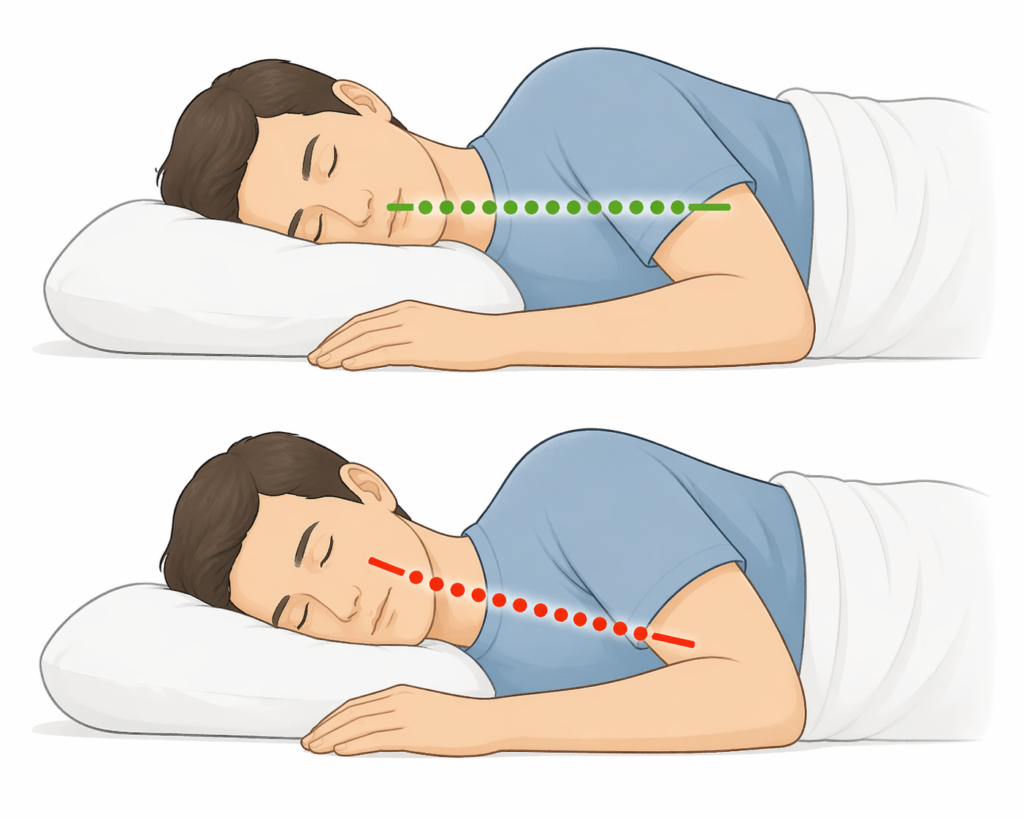
Your pillow controls the position of your neck for hours every night. If your pillow isn’t keeping your neck properly aligned, switching to a cervical pillow designed for proper neck support can make a noticeable difference. These types of pillows are designed to keep your head and spine in a neutral position throughout the night.
If it’s too high, your neck bends forward. If it’s too flat, your head tilts backward. Neither position is natural.
Over time, this creates constant low-level strain in the muscles and joints of your neck. You might not feel it immediately, but after several hours in that position, the stiffness shows up when you wake up.
This is one of the most common and most underestimated causes.
2. Sleeping in a position that puts your neck under stress
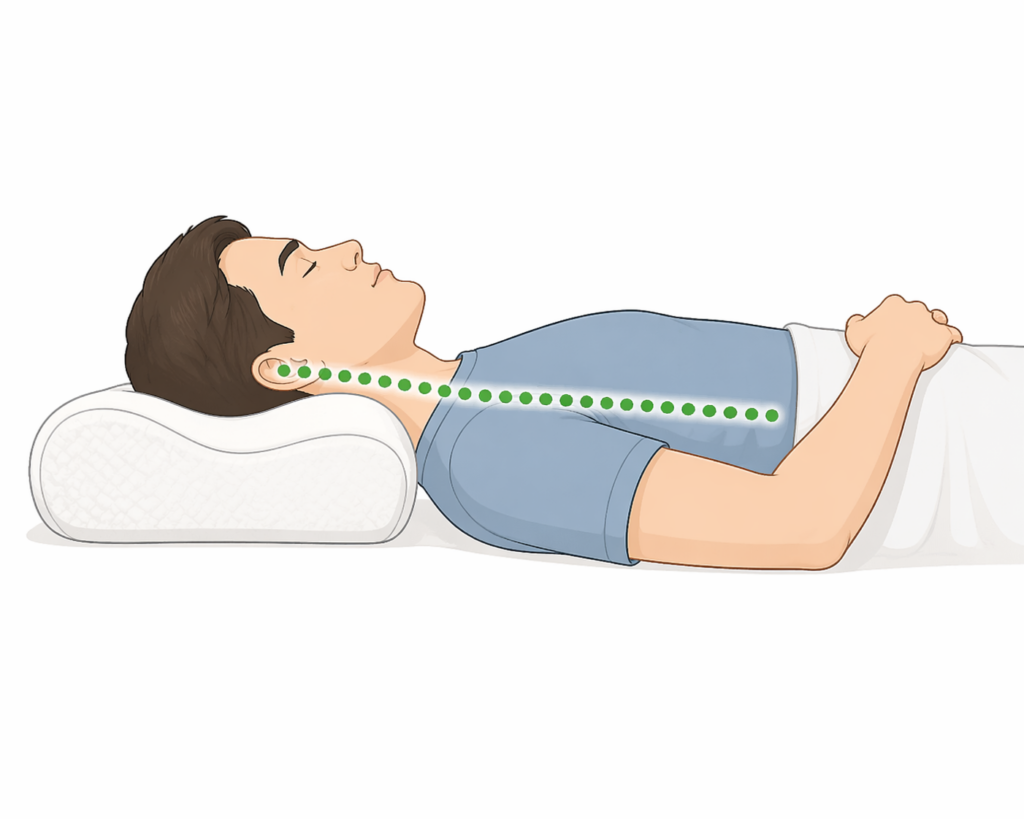
Your sleeping position has a direct impact on your neck alignment.
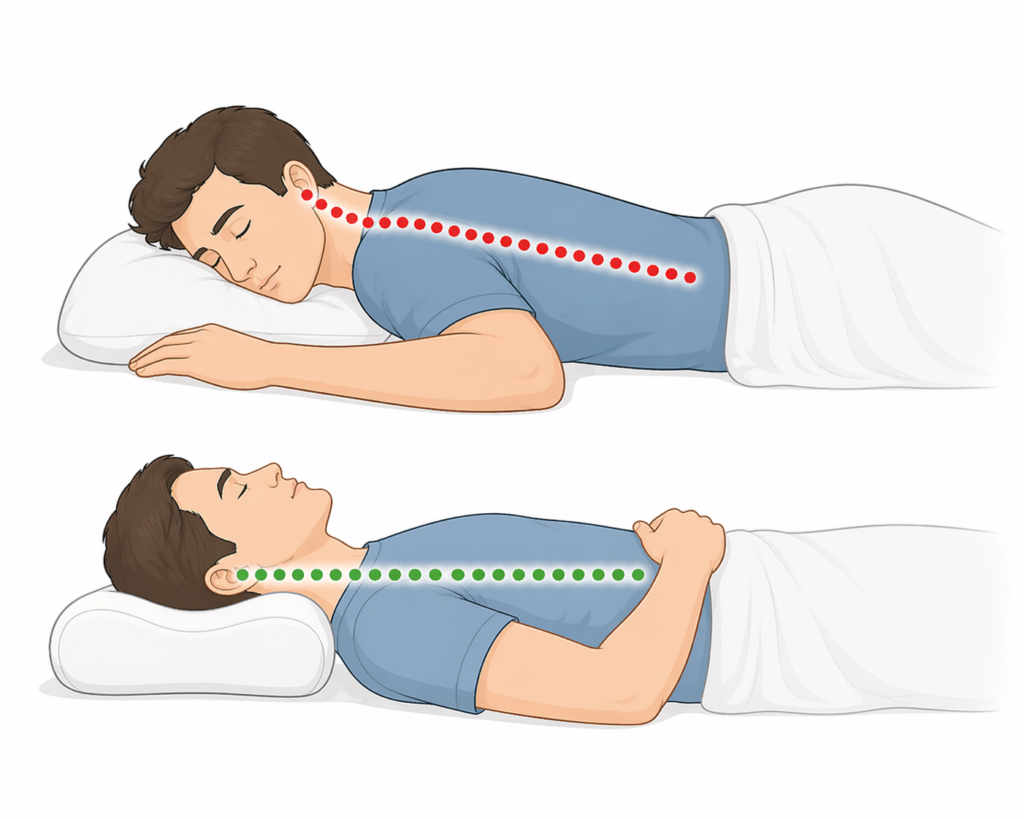
Sleeping on your stomach is especially problematic because your head has to stay turned to one side for long periods. That twist alone can overload your neck muscles.
Even side sleeping can cause issues if your pillow doesn’t fill the space between your head and shoulders properly. Without that support, your neck tilts and stays there all night.
3. Poor posture during the day that carries into the night
What you do during the day doesn’t reset when you go to sleep.
If you spend hours looking down at your phone, working on a laptop, or sitting with poor posture, your neck is already under tension before bedtime.
That tension stays in your muscles. When you lie down, your neck doesn’t fully relax, which increases the chances of waking up with pain or stiffness.
4. Muscle tension and stress that don’t go away overnight
Stress doesn’t just affect your mind, it also affects your body.
When you’re stressed, your muscles tend to stay slightly contracted, especially around the neck and shoulders. This constant tension reduces blood flow and limits recovery during sleep.
As a result, you wake up feeling tight, even if you slept enough hours.
5. A mattress that doesn’t keep your spine aligned
Even though your neck seems like an isolated area, it depends on your entire body being properly supported.
If your mattress is too soft or uneven, your body sinks in certain areas. This shifts your spine out of alignment and forces your neck to compensate.
Over several hours, that compensation turns into discomfort or pain.
6. Staying in the same awkward position for too long
Sometimes the issue isn’t your setup, but how long you stay in one position.
Even a slightly неправильная angle can become a problem if you hold it for hours without moving. This can compress joints, strain muscles, and reduce circulation in certain areas of your neck.
When you wake up, that accumulated stress shows up as stiffness or limited movement.
How to Fix Neck Pain After Sleeping
If you keep waking up with neck pain after sleeping, the solution usually isn’t complicated. Most of the time, it comes down to fixing how your neck is supported during the night and reducing the tension that builds up during the day.
One of the most effective changes you can make is improving your pillow. Your neck needs to stay aligned with your spine while you sleep. If your current pillow doesn’t support that natural position, your muscles stay under tension for hours.
If that’s your case, switching to a cervical pillow designed for proper neck support can make a noticeable difference, especially if you wake up with stiffness frequently. These types of pillows help keep your head and spine in a neutral position throughout the night, reducing strain on your neck.
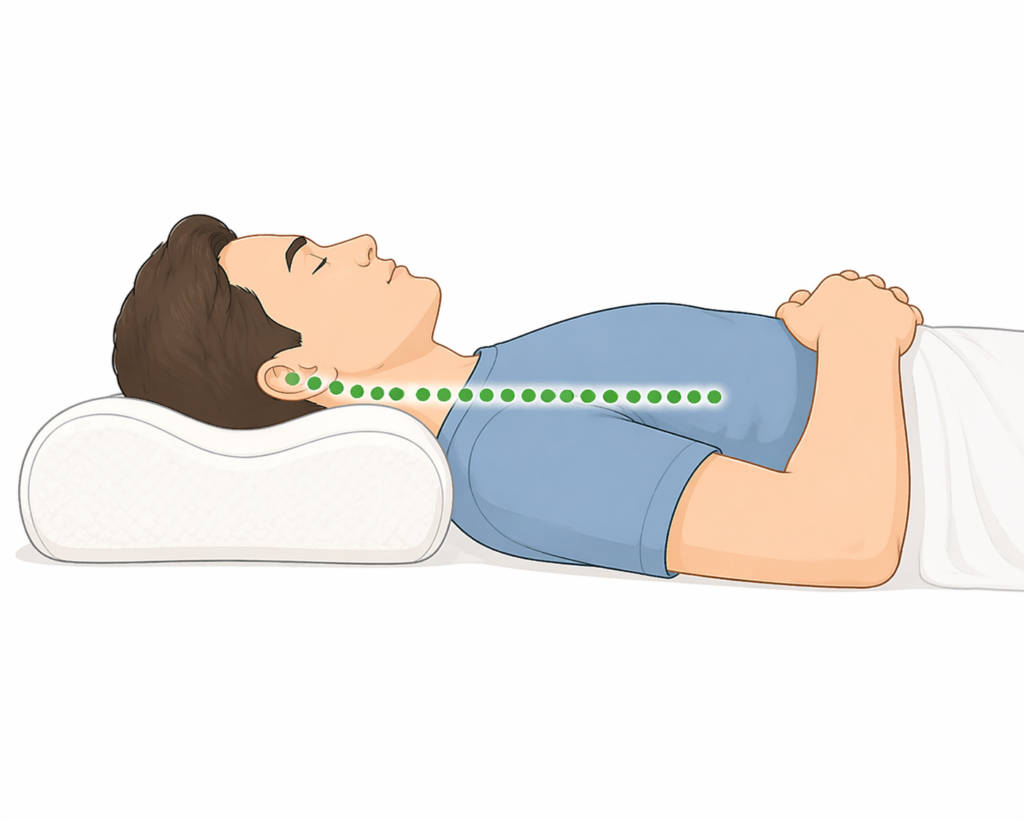
Your sleeping position also matters more than most people think. Sleeping on your stomach forces your neck into a twisted position for long periods, which can easily lead to pain. If possible, try sleeping on your back or on your side, making sure your pillow fills the space between your head and shoulders.
Another important factor is what you do during the day. If you spend hours looking down at your phone or working with poor posture, your neck is already overloaded before you even go to bed. Small changes like raising your screen or keeping your head more aligned with your body can reduce the tension that carries into the night.
If the problem keeps coming back, adding better support to your sleeping setup can help over time. Improving your pillow, adjusting your sleeping position, and making small ergonomic changes during the day usually solve the root of the issue instead of just masking the symptoms.
Final Thoughts
Neck pain after sleeping is one of the most common issues people deal with, and in most cases, it’s a sign that something in your routine isn’t working as it should.
It’s rarely caused by a single factor. More often, it comes from a combination of poor neck support, bad sleeping positions, and tension that builds up throughout the day.
The good news is that small changes can make a noticeable difference. Improving how your neck is supported while you sleep, adjusting your position, and paying attention to your posture during the day can significantly reduce or even eliminate the problem over time.
If you keep waking up with discomfort, don’t ignore it. Your body is telling you that something needs to change.
Fix the cause, not just the symptom, and the results usually come faster than you expect.
*Disclosure: Some of the links on this site are affiliate links. This means that if you choose to make a purchase through them, we may earn a small commission at no additional cost to you. We only recommend products or tools that are relevant to the content and that we believe can provide value. This helps support the site and allows us to continue creating useful, free content.