
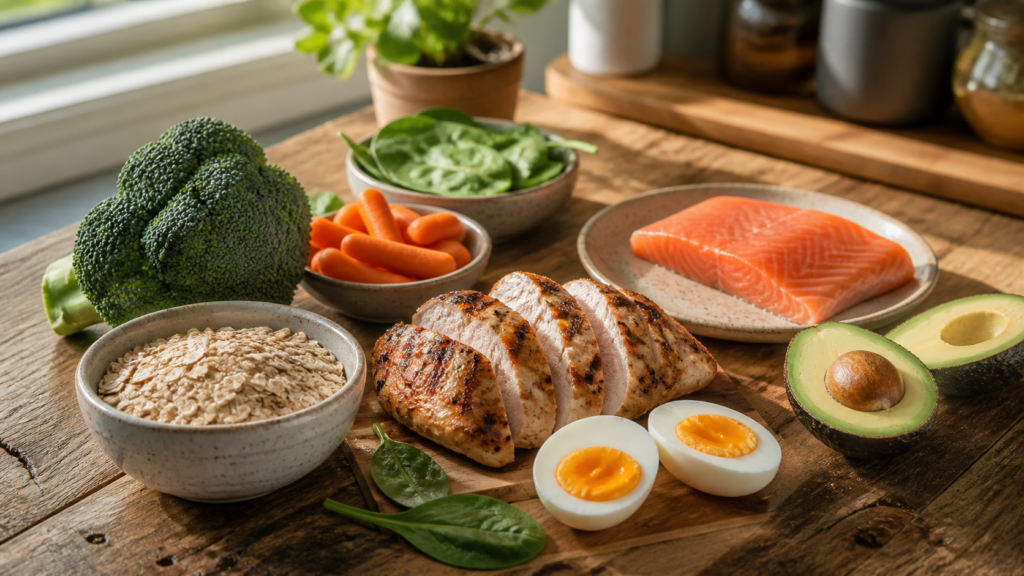
You’ve been eating less. You’ve cut out bread, skipped dessert, said no to pizza more times than you can count. And yet — the scale barely moves.
Sound familiar?
The truth is, most people struggling with fat loss aren’t failing because of willpower. They’re failing because they’re eating the wrong foods — not just too many calories. Knowing the best foods for fat loss isn’t about following the latest trend. It’s about understanding how food interacts with your hunger, your hormones, and your energy levels.
This guide breaks it all down. No fluff, no vague advice. Just what works — and why.
Why Food Choice Matters for Fat Loss
Calories matter. That part is true. But here’s what most people miss: not all calories affect your body the same way.
Two people can eat the same number of calories but feel completely different levels of hunger, fullness, and energy throughout the day — depending entirely on what those calories come from.
Hunger hormones like ghrelin (which makes you feel hungry) and leptin (which signals fullness) respond differently to protein versus sugar, fiber versus refined carbs. A 400-calorie bag of chips leaves you hungry an hour later. A 400-calorie meal with protein, fiber, and healthy fats keeps you full for four to five hours.
This is where most diets fail — they focus on eating less without considering what to eat. And when hunger wins, the diet ends.
Research published by the National Institutes of Health consistently shows that dietary composition significantly impacts adherence — meaning the foods you choose determine whether you can actually stick to a deficit long enough to see results.
Fat loss isn’t about suffering through hunger. It’s about making hunger irrelevant.
What Makes the Best Foods for Fat Loss
Not all «healthy» foods are equal when it comes to fat loss. The best choices share a few key traits:
- High in protein — Protein has a high thermic effect (your body burns roughly 20–30% of protein calories just digesting it). It also preserves lean muscle during a deficit and keeps you full longer than any other macronutrient.
- High in fiber — Fiber slows digestion, blunts blood sugar spikes, and feeds beneficial gut bacteria. It physically expands in your stomach, promoting early satiety.
- Low energy density — These foods give you a large volume for relatively few calories. You feel full, but you haven’t overdone it.
- Minimally processed — Whole foods require more chewing, digest more slowly, and don’t trigger the same reward-driven overeating that ultra-processed foods do.
- Satiating per calorie — Some foods are simply better at making you feel satisfied for how little they cost you calorically. This is called the satiety index, and it’s hugely underrated.
Best Foods for Fat Loss
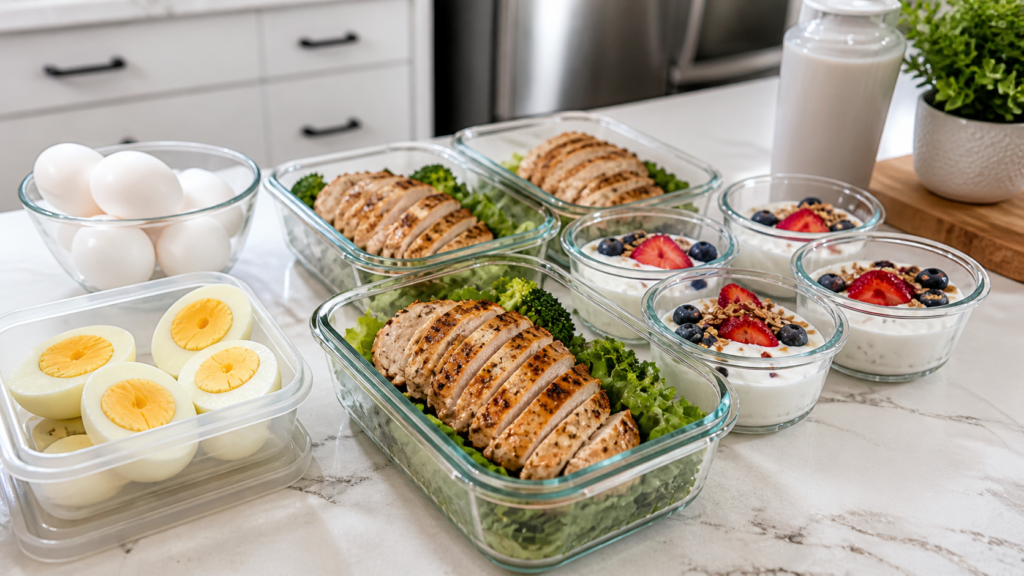
High Protein Foods for Fat Loss
Protein is the single most important macronutrient when your goal is losing fat — not muscle.
Here’s why it matters more than people realize:
- Thermic Effect of Food (TEF): Around 25–30% of protein calories are burned during digestion. No other macronutrient comes close.
- Muscle retention: In a calorie deficit, your body can break down muscle for energy. Adequate protein prevents this, keeping your metabolism higher.
- Satiety: Protein raises levels of fullness hormones (GLP-1, PYY) and reduces ghrelin. You eat less — without trying.
Best protein foods for fat loss:
- Chicken breast — Roughly 165 calories and 31g of protein per 100g. Hard to beat.
- Eggs — Complete protein, rich in vitamins, and highly satiating. Studies show eggs at breakfast reduce calorie intake later in the day.
- Greek yogurt (plain, non-fat) — 10–17g protein per 100g, with gut-friendly probiotics. Add berries, not sugar.
- Salmon and fatty fish — Protein plus omega-3 fats, which reduce inflammation linked to metabolic dysfunction.
- Lean beef — High protein, iron, B12, and zinc. Don’t fear it — just watch the portion.
- Cottage cheese — Slow-digesting casein protein, excellent as a late-night option.
A reasonable target: 0.7–1g of protein per pound of bodyweight per day. If you’re not hitting that, hunger will always win. Harvard Health Publishing supports high-protein diets as one of the most evidence-backed approaches to sustainable fat loss.
High Fiber Foods
Fiber is the unsung hero of fat loss. It doesn’t get the same marketing as protein, but it works just as hard.
Soluble fiber forms a gel in your digestive tract, slowing the absorption of nutrients and extending the sensation of fullness. Insoluble fiber adds bulk, which also helps you feel satisfied.
Top fiber foods for fat loss:
- Oats — Beta-glucan fiber that literally thickens in your gut and keeps you full for hours. Start your day with oats and you’ll naturally eat less at lunch.
- Lentils and legumes — Fiber and protein in one package. 1 cup of cooked lentils = 18g protein and 15g fiber.
- Broccoli, cauliflower, Brussels sprouts — Low calorie, high volume, high fiber. Fill half your plate with these and you’re winning.
- Berries — Among the most fiber-dense fruits per calorie. Blueberries, raspberries, strawberries — all excellent choices.
- Apples — The pectin fiber in apples is particularly filling. Eat the skin.
- Spinach and leafy greens — Essentially zero-calorie foods that add bulk without any metabolic cost.
Aim for 25–35g of fiber per day. Most people get half that. It’s one of the simplest, cheapest adjustments you can make.
Low-Calorie, High-Volume Foods
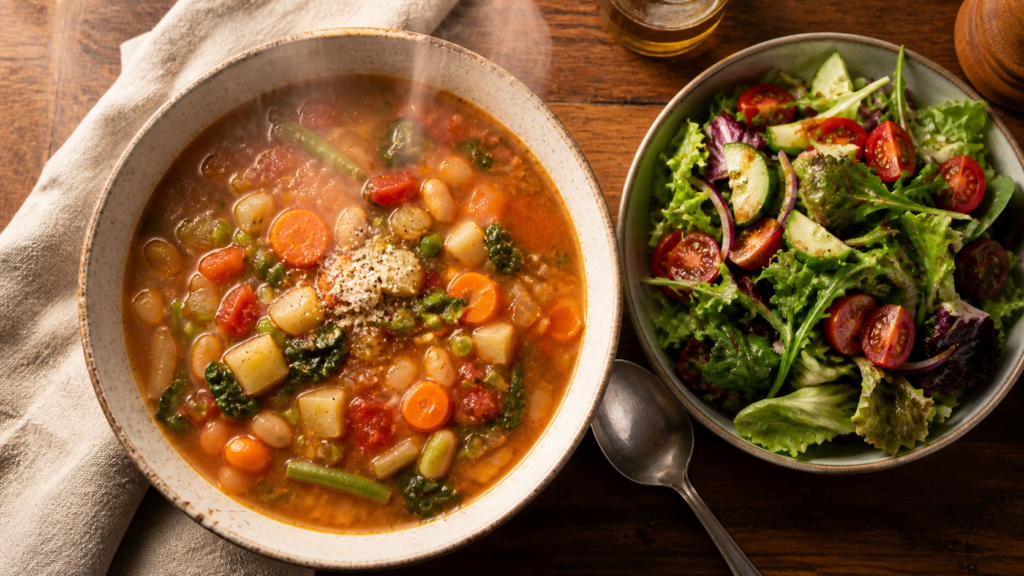
This is where the concept of energy density becomes your best friend.
Energy density = calories per gram of food. Low-energy-dense foods let you eat more food for fewer calories. You feel physically full, your stomach stretches, satiety signals fire — and you’ve consumed way fewer calories than you think.
The champion of satiety: the potato.
You’ve probably heard that potatoes are bad for you. That’s backwards. The Satiety Index study ranked boiled potatoes as the most satiating food tested — beating white bread by 323%. A medium boiled potato (~130 calories) will fill you up more than a candy bar with the same calories. The problem is never the potato. It’s the butter, sour cream, and cheese we pile on top.
Other high-volume, low-calorie stars:
- Broth-based soups — Water content makes them incredibly filling per calorie. Start a meal with soup and you’ll eat significantly less in the main course.
- Large salads (without calorie-dense dressings) — A massive salad can clock in under 150 calories and keep you full for hours.
- Cucumbers, celery, zucchini — Almost entirely water. Eat as much as you want.
- Watermelon and strawberries — Mostly water, naturally sweet, very low calorie.
Smart Carbs for Fat Loss
Here’s a perspective shift that might change how you eat: carbs are not the enemy.
Insulin doesn’t cause fat gain by itself. A calorie surplus does. Plenty of lean, healthy people eat rice, potatoes, and oats every single day.
The issue is which carbs and how much. Ultra-processed carbs (white bread, sugary cereals, pastries) spike blood sugar rapidly, cause energy crashes, and trigger hunger again within hours. Smart carbs do the opposite.
Smart carb choices:
- White rice — Yes, even white rice. Paired with protein and vegetables, it’s a perfectly fine carb source that keeps you energized.
- Sweet potatoes — More fiber and micronutrients than white potatoes, and naturally sweet without the sugar.
- Oats — Already mentioned above, but worth repeating. Oats are one of the best breakfast choices for fat loss, period.
- Whole grain bread — Slower digesting than white bread, more filling, more nutrients. Swap one for the other and you’ll feel the difference.
- Quinoa — A complete protein and a carb. Great for plant-based eaters.
The key isn’t to fear carbs — it’s to pair them wisely (with protein and fiber) and eat appropriate portions.
Healthy Fats: How to Use Them Correctly
Fat doesn’t make you fat. Excess calories do. But healthy fats come with an important caveat: they are very calorie-dense.
1 gram of fat = 9 calories. Compare that to protein or carbs at 4 calories per gram. This means even «healthy» fats like olive oil and nuts can quietly add hundreds of calories to your day if you’re not paying attention.
Best healthy fat sources for fat loss:
- Avocado — Monounsaturated fats + fiber. Half an avocado (~120 calories) is a solid addition, but not the full one.
- Olive oil — Use it, but measure it. One tablespoon = 120 calories. Don’t pour freely.
- Walnuts and almonds — Nutrient-dense and filling, but 1 oz = ~160–170 calories. Portion matters.
- Fatty fish (salmon, mackerel, sardines) — Omega-3 fats that reduce inflammation, support brain health, and improve body composition.
- Eggs (again) — The yolk contains healthy fats and fat-soluble vitamins. Don’t ditch the yolk.
Fats are valuable — just account for them.
The Complete Best Foods for Fat Loss Table
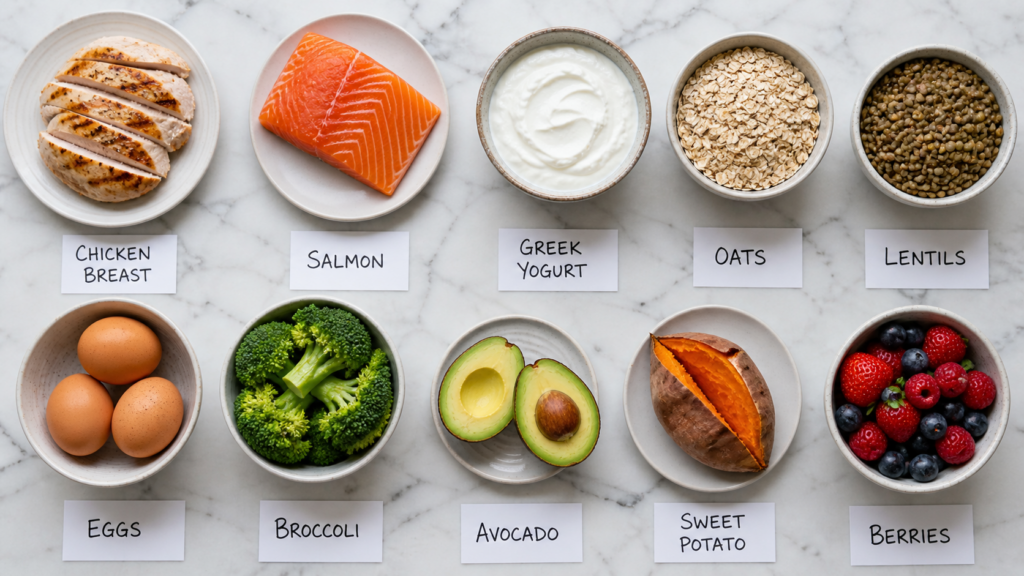
| Food | Calories (per 100g) | Why It Helps Fat Loss | Best Way to Eat It |
|---|---|---|---|
| Chicken Breast | 165 | Highest protein-to-calorie ratio of any meat | Grilled, baked, or air-fried — skip the breading |
| Eggs | 155 | Complete protein, satiating, versatile | Boiled, scrambled, or poached — keep the yolk |
| Greek Yogurt (plain) | 59 | High protein, probiotics, low sugar | Add berries and a drizzle of honey, skip flavored versions |
| Salmon | 208 | Protein + omega-3s, anti-inflammatory | Baked or pan-seared with lemon and herbs |
| Oats | 389 | Beta-glucan fiber, long-lasting satiety | Overnight oats or cooked — avoid instant flavored packets |
| Lentils | 116 | Protein + fiber in one food | Soups, stews, curries, or cold salads |
| Broccoli | 34 | Extremely low calorie, high fiber, nutrient-dense | Roasted, steamed, or stir-fried |
| Boiled Potato | 87 | #1 on the satiety index — keeps you full longest | Boil or bake — avoid frying and heavy toppings |
| Berries (mixed) | 50–60 | High fiber, antioxidant-rich, low sugar | Fresh or frozen, added to yogurt or oats |
| Cottage Cheese | 98 | Slow-digesting casein protein, filling | With fruit or on crackers as a snack |
| Sweet Potato | 86 | Complex carbs, fiber, vitamins A and C | Baked or mashed — naturally sweet without added sugar |
| Spinach | 23 | Near-zero calorie, rich in iron and folate | Raw in salads or wilted into eggs and sauces |
Common Fat Loss Mistakes
This section might be the most important one in this guide.
You can eat «healthy» every day and still not lose fat. Here’s why.
1. Eating «healthy» but high-calorie foods
Nuts, avocado, olive oil, granola, nut butters — all legitimately nutritious. But they’re also extremely calorie-dense. A handful of almonds is 170 calories. Two tablespoons of peanut butter is 190. It adds up faster than you think. Healthy doesn’t automatically mean low-calorie.
2. Not eating enough protein
Most people eat far less protein than they think. Without adequate protein (typically 0.7–1g per pound of bodyweight), you lose muscle alongside fat. That kills your metabolism and leaves you looking «skinny fat» rather than lean.
3. Drinking calories without realizing it
A morning latte with oat milk: ~200 calories. A glass of orange juice: ~110 calories. A smoothie with banana, peanut butter, and almond milk: 400+ calories. Liquid calories don’t register satiety the same way solid food does — which means you can drink 600 calories and still feel hungry. Switch to water, black coffee, or unsweetened tea.
4. Overeating nuts
You’ve probably noticed this — you tell yourself «just a small handful» and somehow eat 400 calories. Nuts are extremely easy to overeat because they’re small, crunchy, and delicious. Measure them. Always.
5. Fear of carbs
Avoiding all carbs often leads to low energy, poor workouts, and intense cravings that eventually cause a binge. Smart carbs paired with protein and fiber aren’t the problem — they’re part of the solution.
6. No structure or consistency
Eating «pretty well» Monday through Friday and then having a free-for-all weekend can easily erase your weekly deficit. You don’t need to be perfect. But you do need to be consistent.
Real Fat Loss Meal Examples
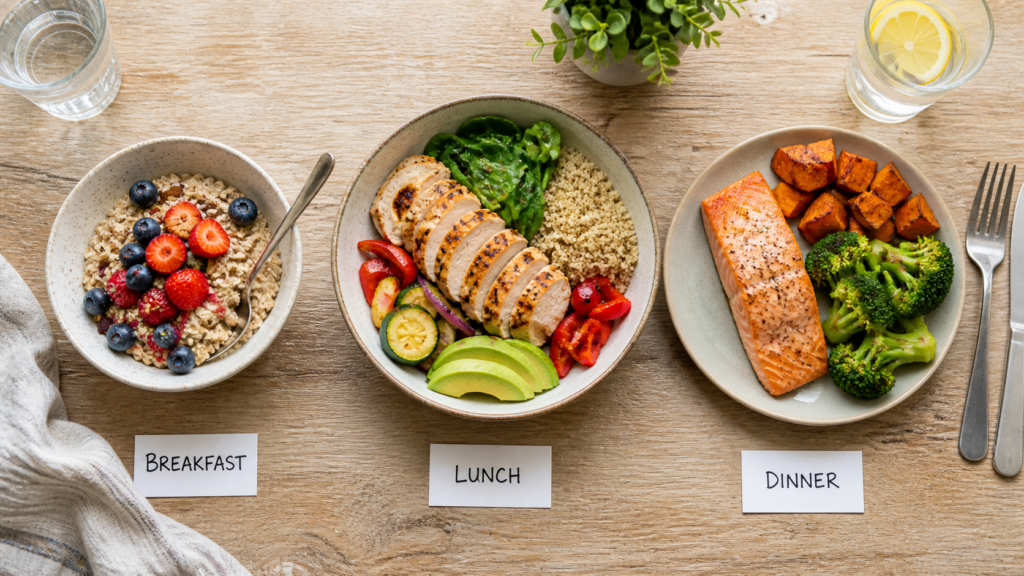
These aren’t bodybuilder meals. These are real, practical meals that a normal person can eat and enjoy.
Day 1 — Classic and Simple
Breakfast: Overnight oats made with rolled oats, plain Greek yogurt, a handful of blueberries, and a tablespoon of chia seeds. ~400 calories, ~25g protein.
Lunch: Grilled chicken breast (150g) over a large mixed salad with cucumber, cherry tomatoes, red onion, and a light olive oil and lemon dressing. ~450 calories, ~40g protein.
Dinner: Baked salmon fillet (150g), a medium baked sweet potato, and steamed broccoli. ~500 calories, ~35g protein.
Daily totals: ~1,350–1,500 calories | ~100g protein | High fiber
Day 2 — Budget-Friendly
Breakfast: Two scrambled eggs with sautéed spinach and a slice of whole grain toast. Coffee with a splash of milk. ~350 calories, ~22g protein.
Lunch: Lentil soup (homemade or canned) with a side of sliced cucumber and a small apple. ~400 calories, ~20g protein.
Dinner: Stir-fried lean ground beef (100g) with bell peppers, zucchini, onion, and served over white rice (150g cooked). ~500 calories, ~30g protein.
Daily totals: ~1,250–1,400 calories | ~72g protein | High fiber
Day 3 — Higher Volume, Maximum Fullness
Breakfast: Large bowl of oatmeal (80g dry oats) with a sliced banana and a tablespoon of almond butter. ~450 calories, ~15g protein. Add a side of two boiled eggs (+150 cal, +12g protein).
Lunch: Big tuna salad (canned tuna in water, mixed with low-fat Greek yogurt instead of mayo, diced celery, and pickles) in lettuce wraps or on whole grain bread. ~400 calories, ~38g protein.
Dinner: Large bowl of homemade vegetable and chicken soup — broth-based, loaded with carrots, celery, onion, zucchini, and 120g of chicken breast. ~350 calories, ~30g protein.
Daily totals: ~1,350–1,500 calories | ~95g protein | Very high fiber and volume
Simple Rules to Choose the Best Foods for Fat Loss
If remembering all of this feels overwhelming, boil it down to these principles:
- Build every meal around protein first. Ask yourself: «Where’s my protein?» before building the rest of the plate.
- Make vegetables half your plate. They’re the cheapest, most filling thing you can eat. Don’t skip them.
- Stop drinking calories. This single switch saves most people 200–400 calories per day without feeling any less full.
- Choose foods that keep you full, not foods that taste good in the moment but leave you hungry 90 minutes later.
- Weigh and measure — at least in the beginning. Portion distortion is real. A «tablespoon» of oil is often two or three. A «handful» of nuts is often two servings.
- Don’t fear carbs — choose smart ones. Rice, potatoes, oats, and legumes are not the problem. Highly processed, sugar-laden carbs are.
- If you’re always hungry, add more protein and fiber — not fewer calories.
- Consistency beats perfection. An 80% adherent plan you follow for six months beats a 100% perfect plan you follow for two weeks.
Conclusion
Fat loss doesn’t require an extreme diet, exotic superfoods, or rigid meal plans. It comes down to a few consistently applied principles: eat enough protein, include plenty of fiber-rich foods, fill your plate with volume, and limit the ultra-processed stuff that makes it impossible to control portions.
The best foods for fat loss aren’t expensive or complicated. Chicken, eggs, Greek yogurt, oats, lentils, potatoes, vegetables, and berries — these are affordable, accessible, and backed by decades of research.
Start with one change. Add more protein to your breakfast. Swap your afternoon snack for Greek yogurt and berries. Add a vegetable to dinner. Small, consistent changes compound into real results.
You don’t have to be perfect. You just have to be consistent — and know what you’re eating.
Sources: