
There’s something uniquely frustrating about waking up with a headache. You haven’t done anything yet. No screens, no stress, no skipped meals — and yet there it is, that familiar pressure behind your eyes or tightness across your forehead, greeting you before the day has even started.
Most people reach for ibuprofen, chalk it up to «bad sleep,» and move on. But if it keeps happening, the cause is almost certainly more specific — and more fixable — than you think.
Morning headaches are a distinct category. They behave differently from the tension headaches that build over a long workday or the dehydration headaches that hit mid-afternoon. They tend to be dull, diffuse, and worst right after waking — then gradually fade as you move around. That pattern is a clue. Your body is telling you something went wrong during the night, not something you did this morning.
This article breaks down the eight most overlooked reasons people wake up with headaches — including some you’ve probably never considered — along with specific, practical steps to address each one.
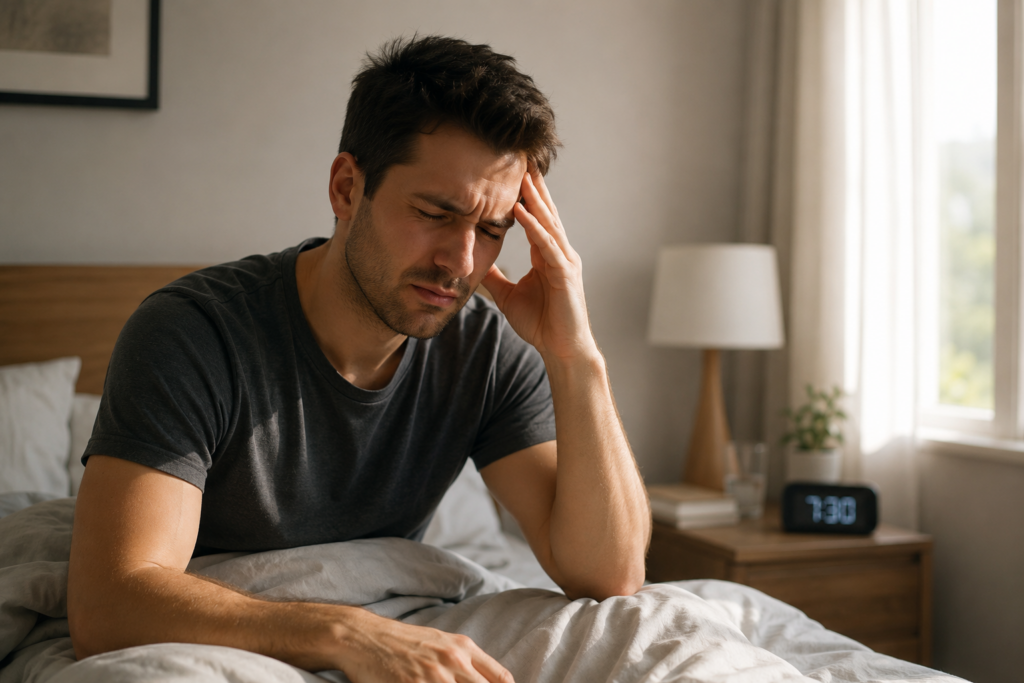
Why Morning Headaches Are Different — and Why That Matters
Most headaches respond to triggers: a long screen session, stress, dehydration, a skipped meal. They build throughout the day and peak in the afternoon or early evening.
Morning headaches work differently. They peak at waking. For most people, that means the trigger happened during sleep — a time when you have almost no conscious control over your body.
This is why the standard advice («drink water, reduce stress, sleep more») so often fails. The actual problem isn’t hydration at 8am — it’s what happened between 11pm and 7am while you weren’t paying attention.
Understanding your morning headache requires thinking about sleep not as passive rest but as a complex physiological process with multiple things that can silently go wrong.
At a Glance: 8 Hidden Causes of Morning Headaches
| Cause | Key Mechanism | Signature Sign |
|---|---|---|
| 💧 Dehydration during sleep | Fluid loss without replenishment | Dry mouth + dull, band-like pressure |
| 😬 Jaw clenching / bruxism | Muscle fatigue and nerve compression | Soreness in jaw, temples, or cheeks |
| 🛏️ Poor sleep posture | Cervical spine stress, restricted blood flow | Neck stiffness that turns into a headache |
| 😴 Sleep apnea | Oxygen drops trigger compensatory pressure | Worse after napping; disappears mid-morning |
| ☕ Caffeine withdrawal | Adenosine rebound and vascular shifts | Throbbing; worse if sleep ran longer than usual |
| 🧍 Neck tension buildup | Sustained muscular contraction overnight | Stiff neck + dull occipital pressure |
| 🌬️ Poor bedroom air quality | CO₂ accumulation or allergen load | Groggy + frontal headache; often seasonal |
| ⏰ Inconsistent sleep schedule | Circadian misalignment disrupts pain thresholds | Worst on weekends or after late nights |
Dehydration During Sleep (It’s Not What You Think)
Most people know dehydration causes headaches. What they don’t realize is that you lose fluid continuously throughout the night — through breathing, sweating, and baseline metabolic activity. An average adult loses between 0.5 and 1 liter of water overnight just through respiration alone.
If your hydration was borderline before bed, by 7am you’re already mildly dehydrated. The brain floats in cerebrospinal fluid, and when fluid volume drops, intracranial pressure changes — the brain essentially experiences a kind of «pulling» sensation as the membranes surrounding it tense slightly. That’s the headache.
Why morning specifically? Because the deficit accumulates over 7–8 hours without any intake. By contrast, daytime dehydration is buffered by incidental sipping throughout the day.
Signs this is your cause:
- Dry mouth or thick saliva when you wake
- Urine is deep yellow first thing in the morning
- The headache improves noticeably within 30–45 minutes of drinking water
- You sleep in a warm room or under heavy covers
What actually helps: A 250–300ml glass of water immediately before bed — not two hours before, immediately before. Keep water on your nightstand so the first thing you do after waking is drink, not scroll. If you sleep in a warm room or sweat at night, electrolytes (even just a small pinch of salt in morning water) help restore balance faster than plain water alone.
💧 Tip: If you consistently wake with a dry mouth even after drinking water before bed, it may point to a separate issue worth investigating.
2. Jaw Clenching and Teeth Grinding (Bruxism)
This one is widely underdiagnosed — mostly because it happens while you’re unconscious.
Bruxism is the involuntary clenching or grinding of teeth during sleep. It affects an estimated 8–10% of adults, though many never know they have it until a dentist notices enamel wear. The muscles involved — the masseter (jaw), temporalis (temple), and pterygoids (inner cheek) — are some of the most powerful in the body relative to their size. Eight hours of sustained or episodic clenching is the mechanical equivalent of an intense workout for your face.
The result? Fatigued, inflamed muscles that refer pain upward into the temples and forehead, and sometimes backward toward the base of the skull.
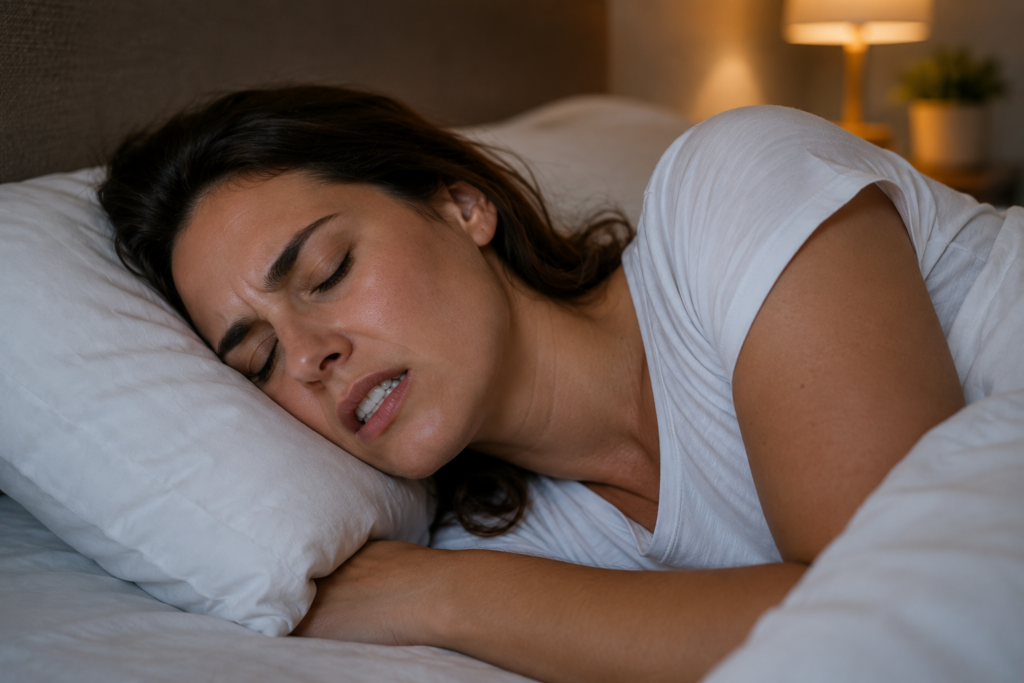
The headache mechanism: Sustained muscle contraction restricts blood flow and causes ischemic pain — the same mechanism behind tension headaches, but localized to the chewing muscles and their nerve pathways.
Signs this is your cause:
- Jaw feels sore or «tired» in the morning
- Teeth sensitivity (particularly to hot/cold) that’s new or worsening
- Clicking or tenderness in the temporomandibular joint (just in front of the ear)
- Partner mentions hearing grinding at night
- Headache is most intense in the temples
What actually helps: A custom occlusal guard (bite splint) from a dentist is the most effective intervention — it doesn’t stop clenching but prevents the mechanical damage and muscle strain from full tooth contact. Over-the-counter guards are better than nothing. Supplementing with magnesium glycinate before bed has decent evidence behind it for reducing bruxism frequency — magnesium plays a direct role in muscle relaxation and nervous system regulation. Reducing alcohol before bed also helps significantly; alcohol suppresses REM sleep but fragments the sleep cycle, which tends to increase parasomnias including bruxism.
3. Poor Sleep Posture and Cervical Spine Stress
Your neck spends 7–8 hours in whatever position your pillow, mattress, and sleeping habits dictate. If that position places sustained stress on the cervical spine — and for a surprisingly large number of people, it does — the result is muscle tension that radiates forward into the head.
Cervicogenic headache (headache originating from the neck) is one of the most commonly misdiagnosed headache types. It typically presents as dull, one-sided pain that starts at the back of the head or upper neck and can radiate toward the forehead, temple, or behind the eye.
The mechanism: The upper cervical spine shares nerve pathways with the trigeminal nerve — the primary pain pathway of the head and face. Sustained compression or tension in the C1–C3 region activates these shared pathways, which the brain interprets as head pain.
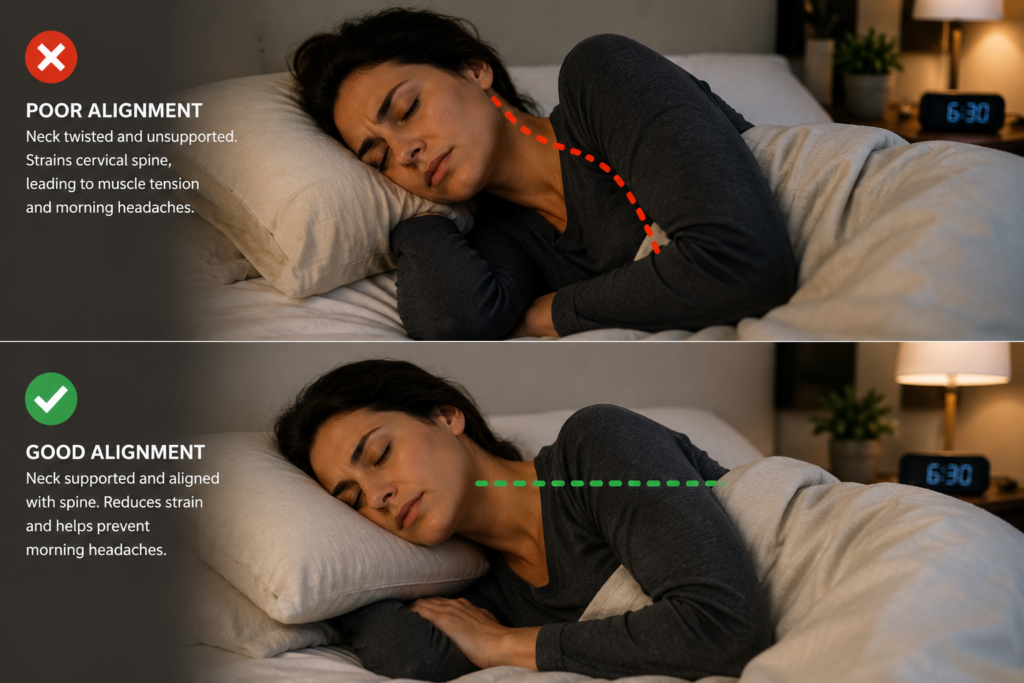
Common posture problems:
- Stomach sleeping (forces neck into extreme rotation for hours)
- Side sleeping with a pillow too high or too low (lateral neck flexion)
- Propping head at an angle with a bunched-up pillow
Signs this is your cause:
- The headache is worse or starts specifically at the base of your skull
- You wake with neck stiffness alongside the headache
- Rotating your neck aggravates the headache
- You tend to sleep on your stomach or in unusual positions
What actually helps: Pillow height is the most important variable. Side sleepers need a thicker pillow that fills the gap between their shoulder and ear. Back sleepers need a lower pillow that maintains natural cervical curve. Switching stomach sleepers is genuinely difficult — a body pillow to prevent rolling can help. If you suspect your neck is the source, a few sessions with a physiotherapist who specializes in cervicogenic headache can make a significant difference.
🔗 For a full breakdown of how sleep position affects your spine, see Best Sleeping Position for Lower Back Pain.
4. Sleep Apnea: The Morning Headache Most People Never Connect
Sleep apnea is one of the most common causes of morning headaches — and one of the most frequently unrecognized. This is partly because the headaches it produces look almost identical to tension headaches, and partly because many people with sleep apnea have no idea they have it.
Here’s the mechanism: During an apnea event, breathing stops (or significantly reduces) for 10 seconds or more. The resulting drop in blood oxygen triggers a compensatory vascular response — blood vessels in the brain dilate to maximize oxygen delivery. Repeated dilation of cerebral vessels throughout the night is what produces the characteristic morning headache.
Why morning specifically? Apnea events tend to cluster in the later stages of sleep when REM sleep is most intense. This means the vasodilation response is most pronounced right before waking.
Signs this is your cause:
- Headache improves significantly within 30 minutes of getting up and moving
- You feel unrefreshed despite adequate sleep hours
- Snoring (or a partner who reports pauses in your breathing)
- Waking with a dry or sore throat
- Daytime sleepiness that seems disproportionate to your sleep duration
- The headache is diffuse — a general pressure rather than a specific point
Sleep apnea morning headaches are also notably worse after naps, because even a 20-minute nap can involve apnea events that produce a brief headache cycle.
What actually helps: The only way to diagnose sleep apnea properly is a sleep study — these are now available as at-home tests through many healthcare providers, which is far less disruptive than in-lab studies. CPAP therapy is highly effective and typically eliminates apnea-related morning headaches within weeks. Positional therapy (sleeping on your side) can reduce mild apnea severity significantly.
5. Caffeine Withdrawal While You Sleep
This one catches people off guard. If you’re a daily coffee or tea drinker, your brain has adapted to the presence of caffeine by upregulating adenosine receptors — essentially making itself more sensitive to adenosine, the compound that drives sleepiness.
Caffeine works by blocking adenosine receptors. When caffeine wears off (typically within 4–6 hours), adenosine floods back in — and during sleep, especially during a long sleep or a lie-in, this rebound effect can trigger vascular headaches by causing the cerebral blood vessels to dilate.
This is why many coffee drinkers wake up with headaches on weekends or days they slept in. A 9am wake-up instead of 7am means two additional hours without caffeine on a system that’s expecting it.
Signs this is your cause:
- Headache specifically on weekends or after longer-than-usual sleep
- Throbbing quality rather than dull pressure
- The headache disappears quickly after coffee or tea
- You drink 2+ cups of coffee daily, consistently
What actually helps: Gradual tapering of caffeine intake is the real long-term fix, but it’s not realistic for everyone. A more practical approach: keep your morning caffeine timing consistent, even on weekends. If you want to sleep in, consider having a small amount of caffeine before going back to sleep — yes, this sounds counterintuitive, but for habituated users, low-dose caffeine before extended sleep can prevent the withdrawal rebound without fully waking you.
6. Neck Tension That Accumulates Overnight
Distinct from posture-related issues, this is about sustained muscle tone — specifically in the suboccipital muscles (the small muscles at the base of your skull) and the upper trapezius. These muscles are particularly vulnerable to tension buildup because they’re involved in head-holding during the day and never fully relax during light sleep.
In people who carry chronic tension in their neck and shoulders — which is most people who sit at desks — these muscles arrive at bedtime already partially contracted. If sleep is light or fragmented, they never fully release, and by morning the accumulated tension has built into a headache.
The suboccipital connection: The suboccipital muscles sit directly over the greater occipital nerve. Even mild sustained compression can produce a distinctive headache that radiates from the base of the skull up and over the top of the head — sometimes described as feeling like a tight band.
Signs this is your cause:
- Pressing on the muscles at the base of your skull reproduces or worsens the headache
- The headache improves after a hot shower
- You work at a screen for most of the day
- Your shoulders feel chronically elevated or tight
What actually helps: A firm pillow placed at the base of the skull (not the head) for 5–10 minutes before bed can passively decompress the suboccipital area. Targeted stretching — chin tucks, cervical lateral flexion holds — done before sleep takes 3 minutes and has a measurable impact on morning headache frequency in people with desk jobs.
🔗 If your neck tension carries into your posture throughout the day, 7 Habits That Quietly Destroy Your Posture Every Day is worth a read.
7. Poor Bedroom Air Quality (The One Nobody Suspects)
You spend a third of your life in your bedroom. If the air in that room is compromised in any way, you’re breathing it for 7–8 hours straight — and the cumulative effect can be significant.
Two main air quality problems drive morning headaches:
CO₂ accumulation: In a closed room with one or two people sleeping, CO₂ levels can rise substantially over the course of the night. Elevated CO₂ causes mild cerebral vasodilation — the same mechanism as other headache triggers. Studies on classroom air quality show cognitive effects starting at CO₂ concentrations that are easily reached in a sealed bedroom overnight.
Allergen and particulate load: Dust mites, pet dander, mold spores, and off-gassing from synthetic bedding or carpets all add to the body’s inflammatory burden. Histamine-mediated sinus congestion reduces nasal airflow, which can trigger both headaches and mouth breathing — a cascade that worsens sleep quality and compounds the problem.
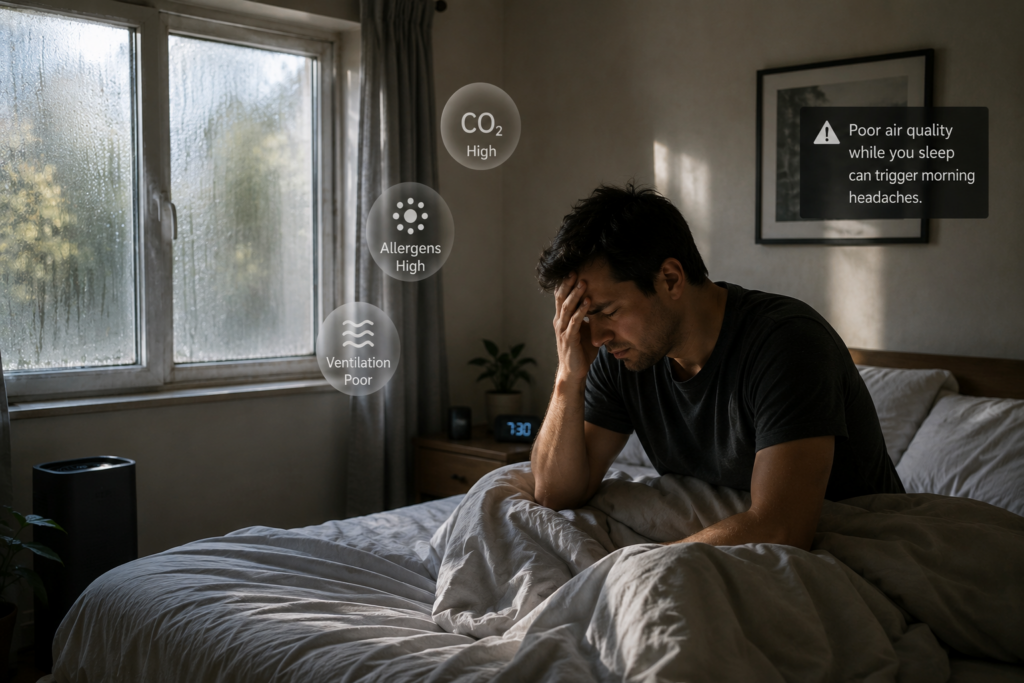
Signs this is your cause:
- Headache is frontal (forehead/sinus area) rather than temporal or occipital
- You feel groggy and foggy even after a full night’s sleep
- Symptoms improve noticeably after opening a window
- Headaches are worse in winter when rooms are sealed
- Pets sleep in the bedroom, or you have carpet
What actually helps: Cracking a window even 2cm creates enough airflow to substantially reduce CO₂ buildup without meaningfully lowering room temperature. An air purifier with a HEPA filter addresses particulate and allergen load. Washing bedding at 60°C weekly eliminates dust mite populations. If opening the window doesn’t help, consider that the outdoor air quality in your area may also be an issue during certain seasons.
🔗 For a full exploration of this topic, Signs Your Bedroom Air Quality Is Making You Tired covers it in depth.
8. Inconsistent Sleep Schedules and Circadian Disruption
Your circadian rhythm isn’t just about when you feel sleepy — it regulates pain sensitivity, cortisol release, inflammatory cytokines, and vascular tone throughout the day. Disrupting it doesn’t just make you tired; it lowers your threshold for pain.
People who sleep at inconsistent times — staying up late some nights, sleeping in on weekends, napping irregularly — experience what researchers call «social jet lag.» The internal clock is constantly trying to recalibrate, and during that process, the hormonal patterns that normally suppress pain in the morning are disrupted.
Morning cortisol is supposed to peak shortly after waking — it’s part of what makes you feel alert and helps manage inflammatory responses. If your sleep timing is inconsistent, this cortisol awakening response can be blunted or mis-timed, leaving you with higher inflammatory activity right after waking — and headaches.
Signs this is your cause:
- Headaches are worst on Mondays or after weekends
- You frequently sleep at very different times on weekdays vs. weekends
- The headaches vary a lot in intensity without obvious external triggers
- You feel generally worse (mood, energy, clarity) on days that follow irregular sleep
What actually helps: Anchoring your wake time is more effective than anchoring your bedtime. Even if you go to bed later on weekends, waking within 30–45 minutes of your usual weekday time preserves enough circadian consistency to prevent the worst effects. Bright light exposure within 10 minutes of waking is a powerful circadian anchor — it doesn’t need to be sunlight; a bright light therapy lamp works year-round.
🔎 Quick Signs Your Headache Is Sleep-Related
Check the signs that match your symptoms. The more boxes you tick, the more likely your headaches are connected to sleep quality or sleep-related issues.
When to Take It More Seriously
Most morning headaches have completely benign causes. But occasionally they signal something that warrants medical attention.
See a doctor if:
- The headache is severe and sudden ("thunderclap") upon waking
- It's progressively getting worse over weeks
- It's accompanied by vision changes, confusion, or neurological symptoms
- Over-the-counter pain relief consistently fails to touch it
- You suspect sleep apnea but haven't been evaluated
Hypertension is also worth mentioning. High blood pressure is often called the "silent" condition, but elevated blood pressure in the early morning hours (which is normal but exaggerated in hypertensive individuals) is a documented cause of morning headaches. A simple blood pressure check can rule this out quickly.
✅ Your Morning Headache Fix Checklist
Start with the most likely culprits and track how many changes you complete tonight.
FAQ
Why do I wake up with a headache every morning? Waking up with headaches regularly usually points to something happening during sleep — most commonly sleep apnea, bruxism, poor sleep posture, dehydration, or circadian disruption. Occasional morning headaches often come from inconsistent sleep timing or a single bad night. Persistent daily morning headaches should be evaluated.
Can my sleeping position cause a headache? Yes, directly. Stomach sleeping forces the neck into sustained rotation for hours, which compresses cervical nerve roots and can trigger cervicogenic headache. Side sleeping with a poorly fitted pillow causes lateral neck flexion that produces similar strain. Correcting sleep posture often resolves these headaches within a week or two.
Is waking up with a headache a sign of sleep apnea? It can be. Sleep apnea causes repeated drops in blood oxygen overnight, triggering cerebral vasodilation that produces a diffuse morning headache. Other signs include snoring, unrefreshing sleep, daytime fatigue, and waking with a dry or sore throat. A home sleep study can confirm or rule out a diagnosis.
Does dehydration really cause morning headaches? Yes — and it's often underestimated because people think of dehydration as a daytime problem. You lose fluid overnight through breathing and mild sweating, so if your hydration was borderline before bed, 7–8 hours later the deficit can be meaningful enough to affect intracranial fluid pressure and trigger headache.
Why do I get headaches after sleeping in on weekends? This is usually caffeine withdrawal or circadian disruption — or both. Extended sleep means longer without caffeine for habituated users, triggering a rebound headache. It also disrupts the circadian cortisol peak that normally modulates pain sensitivity. Keeping your wake time consistent on weekends dramatically reduces this.
Can poor bedroom air quality cause morning headaches? Yes, through CO₂ accumulation and allergen load. A sealed room with two people breathing produces measurably elevated CO₂ by morning, which causes mild cerebral vasodilation. Allergens trigger histamine-mediated sinus congestion and inflammation that compound the problem. Even a slightly open window makes a significant difference.
What's the quickest way to get rid of a morning headache? Drink 250–300ml of water immediately, get upright and move around, and expose yourself to bright light (outside or a lamp). This combination addresses dehydration, promotes CO₂ clearance from overnight air, supports circadian signaling, and helps reset vascular tone. For most sleep-related morning headaches, this produces noticeable improvement within 20–30 minutes.
The Takeaway
Morning headaches are rarely random. They're almost always the echo of something specific that happened while you were sleeping — a dry room, a clenched jaw, a neck that spent the night at the wrong angle, a breathing pattern that nobody's ever measured.
The reason these causes get missed is that morning headaches feel unremarkable enough to brush off with an aspirin and forget about. But if they're happening consistently, your body is giving you eight hours of information every night, and it's worth listening to it.
Start with the simplest possibilities: water before bed, pillow height, a cracked window, consistent wake times. Rule out caffeine withdrawal by tracking patterns across your week. Pay attention to your jaw and neck in the morning. And if nothing you try makes a dent, ask your doctor about a sleep study — undiagnosed sleep apnea is far more common than most people realize, and it's completely fixable.
Morning headaches don't have to be part of your day.