

You sit down to knock out a few tasks. Two hours later, you look up from your screen and feel like someone replaced your blood with wet cement. Your back aches, your legs feel like logs, and your brain is somewhere between half-awake and completely checked out.
Sound familiar?
Feeling sluggish after sitting is one of the most common — and most ignored — energy drains in modern life. It’s not laziness. It’s not weakness. It’s biology working against the sedentary lifestyle most of us have been forced into. The good news? Once you understand what’s actually happening in your body, fixing it takes less time than brewing a cup of coffee.
Let’s dig in.
Why You Feel Sluggish After Sitting
The short answer: your body was never designed to stay still for hours at a time.
Feeling sluggish after sitting is a direct result of your circulatory system slowing down, your muscles switching into a kind of «standby mode,» and your brain getting starved of the oxygen-rich blood it needs to stay sharp. When you’re stationary for extended periods, blood tends to pool in your lower legs. Your heart doesn’t need to work as hard. Your lymphatic system — which relies on muscle movement to drain waste — essentially stalls.
This isn’t just discomfort. It’s a cascade of physiological events that leave you mentally foggy, physically heavy, and completely unmotivated to do much of anything.
Add poor posture into the mix — hunched shoulders, jutting chin, rounded lower back — and you’ve got compressed nerves, restricted breathing, and even lower energy output. It’s a perfect storm for feeling completely wiped out, even if you technically «haven’t done anything.»
What Happens in Your Body When Sitting Too Long
Let’s get specific about what’s going on under the hood.
Your Blood Flow Slows to a Crawl
Within 20–30 minutes of sitting, circulation to your legs begins to decrease. Research published by the American Heart Association confirms that prolonged sitting is linked to reduced arterial function and decreased blood flow — not just in the legs, but throughout the body.
Less blood flow means less oxygen reaching your muscles and your brain. That’s the direct cause of the heavy, foggy sensation most people chalk up to «just being tired.»
Your Metabolism Hits the Brakes
Enzymes responsible for breaking down fat — particularly lipoprotein lipase — drop significantly when you’re sedentary. Glucose metabolism slows. Your cells become less efficient at converting nutrients into usable energy. The result? You feel drained even though you’ve barely moved.
Your Posture Compresses Your Breathing

Slouching shortens the space between your ribs and your pelvis. Your diaphragm literally has less room to expand. Shallow breathing means less oxygen per breath — and less oxygen means your brain and muscles run on fumes. This alone is enough to explain the afternoon fog most desk workers experience daily.
Your Nervous System Downregulates
Sustained stillness signals your autonomic nervous system to shift toward a more parasympathetic (rest-and-digest) state. Your alertness drops. Your reaction time slows. Even your mood can dip — partly because movement is one of the most reliable triggers for dopamine and serotonin release.
Signs You’re Feeling Sluggish After Sitting
Not everyone recognizes what’s causing their afternoon slump. Here are the most common signs your body is signaling it’s time to move:
- Heavy legs or mild tingling in the feet — classic signs of reduced circulation
- Brain fog or difficulty concentrating — oxygen levels in the brain have dropped
- Stiff neck and tight shoulders — postural muscles have been locked in position too long
- Low motivation or mild irritability — neurotransmitter levels are affected by inactivity
- Yawning more than usual — your body is trying to pull in more oxygen
- Lower back ache that creeps in slowly — the lumbar discs are under sustained compression
- A vague, overall feeling of heaviness — this is the cumulative effect of all of the above
If three or more of those hit home, you’re experiencing the full impact of prolonged sitting. And it happens faster than most people think — research from Harvard Health Publishing suggests measurable metabolic changes can occur within just 30 minutes of uninterrupted sitting.
The 5-Minute Reset Routine (CORE)
Here’s the thing about energy resets: they don’t need to be complicated. You don’t need a gym. You don’t need equipment. You just need five minutes and the willingness to actually do it.
This routine is designed specifically to counteract the effects of feeling sluggish after sitting — targeting circulation, posture, breathing, and mental clarity all at once.
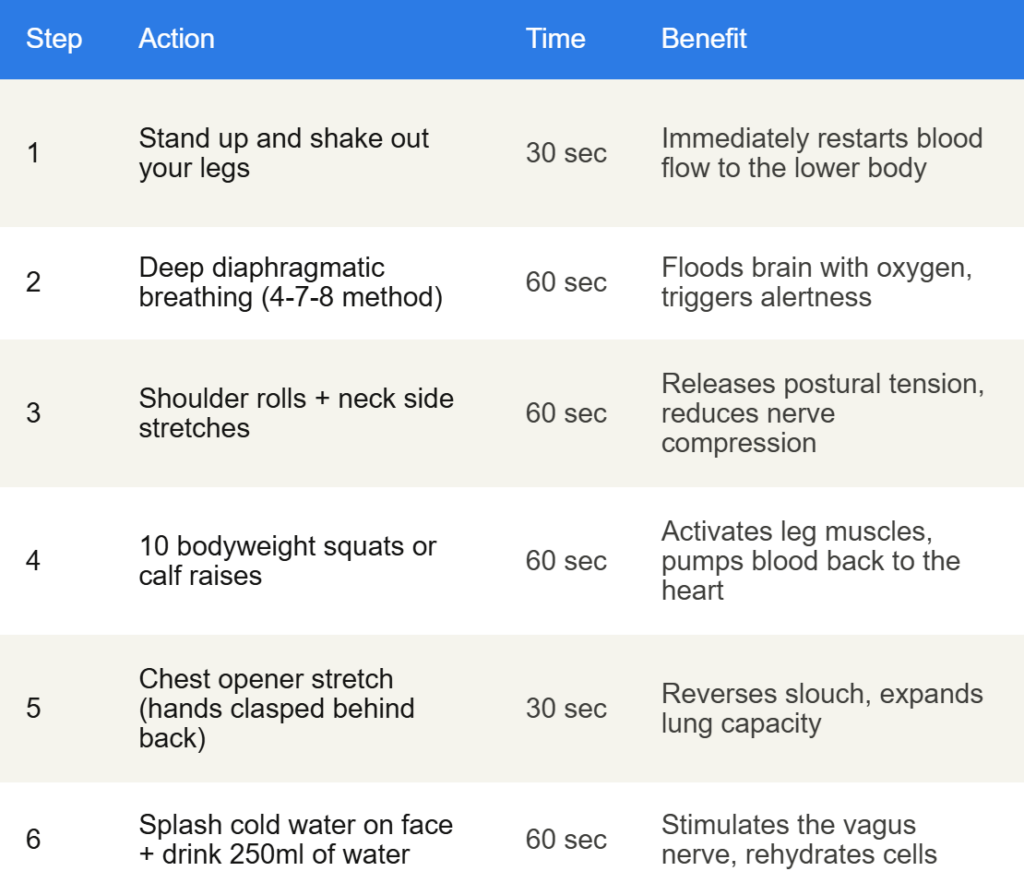
QUICK FIX BOX
⚡ Quick Fix: The 30-Second Emergency Reset Can’t step away from your desk? Try this:
- Sit tall — imagine a string pulling the crown of your head toward the ceiling.
- Take 3 slow, deep belly breaths through your nose.
- Roll your ankles in circles 10 times each direction.
- Squeeze your glutes for 5 seconds, release, repeat 5 times.
That’s it. Not perfect — but it’s enough to interrupt the sluggishness cycle and buy you another 30–45 focused minutes.
🧠 Pro Tip: Set a recurring reminder every 45–50 minutes labeled «MOVE.» Don’t think about it. Don’t finish the paragraph. Just stand up the second it fires. The discipline of micro-interruptions is what separates people who crash at 3pm from those who stay sharp until 6pm.
Quick Desk Fixes to Avoid Feeling Sluggish After Sitting
Prevention beats recovery every time. These small adjustments make a real difference over the course of a day.
Get Your Chair Setup Right
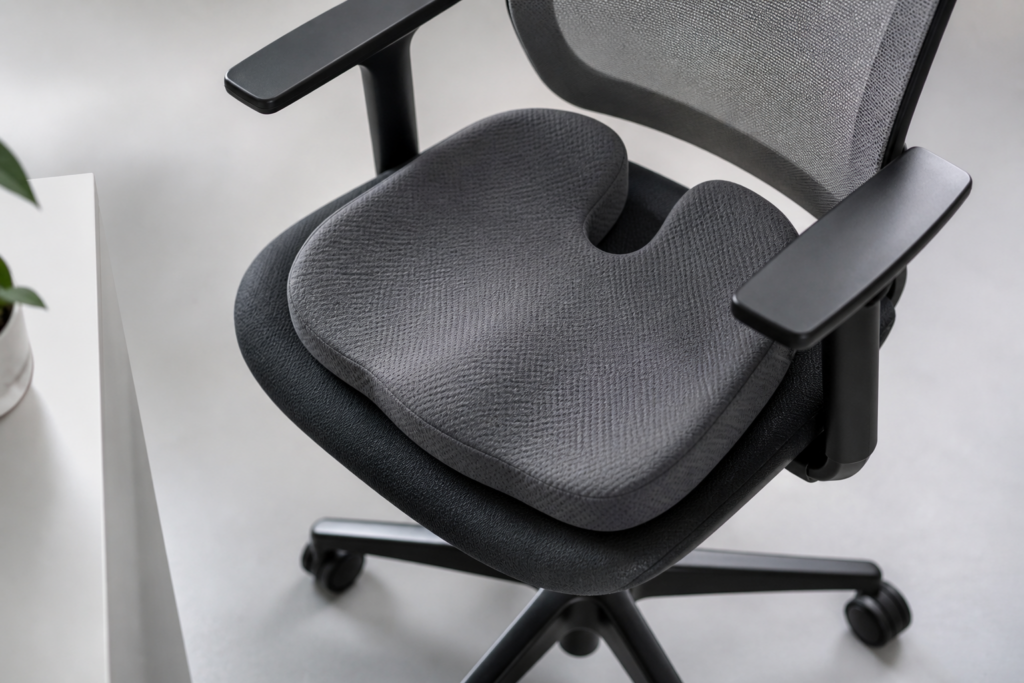
Most people sit too low or too far from their screens, which forces the neck forward and the lower back to collapse. Your monitor should be at eye level, and your hips should be at or slightly above knee height. This alone reduces the postural load that contributes to feeling sluggish after sitting.
If your office chair doesn’t offer proper lumbar support, a quality ergonomic seat cushion can be a game-changer. The Everlasting Comfort Seat Cushion is a popular option — memory foam that relieves tailbone pressure and keeps you from slumping without even thinking about it. Small investment, noticeable difference.
Hydrate Before You Feel Thirsty

Mild dehydration — even at just 1–2% below optimal — measurably reduces cognitive performance and increases feelings of fatigue. Keeping a time marked 500ml water bottle on your desk may help and could make it a habit to finish it before you allow yourself a coffee refill.
Use a Standing Desk Converter (Even Part-Time)
You don’t need to stand all day — that creates its own set of problems. But alternating between sitting and standing every 30–60 minutes keeps your circulatory system more active and dramatically reduces the heavy, stagnant feeling that builds up over hours of sitting.
Correct Your Posture With a Bit of Help
A posture corrector worn for 20–30 minutes a day can retrain your postural muscles to hold you upright with less effort. Brands like Evoke Pro offer adjustable, discreet options that work well under a shirt. Think of it as training wheels for your spine — the goal is to eventually not need it.
Common Mistakes That Make It Worse
These are the habits that seem harmless but are quietly making the afternoon slump worse for most people.
Reaching for caffeine first. Coffee is a vasoconstrictor. When you’re already dealing with sluggish circulation, adding caffeine without hydrating first can actually sharpen the energy crash that follows. Water first, always.
Taking a passive break. Scrolling your phone or watching a video during your break doesn’t give your body what it needs. Rest for the mind is not rest for the circulatory system. Move — even if it’s just a walk to the kitchen and back.
Skipping lunch or eating too much. Both extremes are a problem. Skipping sends blood sugar crashing. A huge meal redirects blood flow to digestion and away from the brain. Aim for a medium-sized, protein-forward lunch and you’ll feel the difference by 2pm.
Sitting in the same position for the entire session. Even shifting your weight, crossing and uncrossing your legs, or reclining slightly now and then helps. Variety of posture is underrated.
Simple Habits That Keep Your Energy Stable All Day
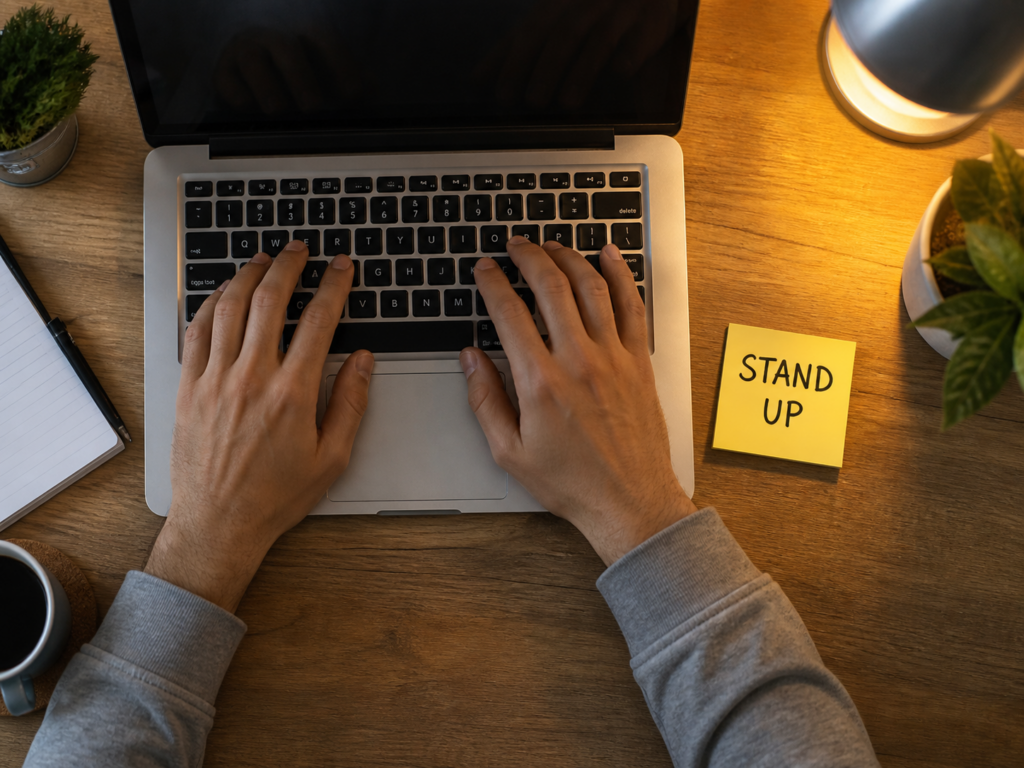
These aren’t quick fixes — they’re the foundational routines that make feeling sluggish after sitting the exception rather than the rule.
Move First Thing in the Morning
Even 10 minutes of movement before you sit down for work — a short walk, some light stretching, a few push-ups — primes your circulatory system and sets a baseline of physical activation that lasts for hours.
Eat for Sustained Energy, Not Quick Satisfaction
Foods high in refined carbs spike and crash blood sugar. Prioritize meals built around protein, healthy fats, and fiber. Your energy levels will be noticeably more stable. This is one of the most underappreciated fixes for chronic mid-day fatigue.
Protect Your Sleep Like It’s a Business Asset
Sleep debt is one of the biggest amplifiers of daytime sluggishness. Even one night of 6 hours instead of 8 measurably reduces cognitive performance the next day. Poor sleep + prolonged sitting = a brutal afternoon.
Build Movement Into Your Environment
The best habit is the one that requires no willpower. Put your printer across the room. Take calls standing up. Walk to a colleague instead of emailing. These tiny frictions add up to meaningful physical activity over the course of a week.
Conclusion
Feeling sluggish after sitting isn’t something you just have to accept as the tax on modern desk work. It’s a predictable biological response — and because it’s predictable, it’s also preventable.
The five-minute reset routine works because it targets the actual causes: stalled circulation, shallow breathing, compressed posture, and a nervous system that’s downshifted into low gear. You don’t need a standing desk, a treadmill, or a gym membership. You need consistency, awareness, and a willingness to interrupt your session before the fog rolls in.
Start small. Set one reminder today. Do the reset once. Notice how different you feel in the 30 minutes that follow.
That feeling — clear head, lighter body, sharper focus — that’s what’s waiting on the other side of five minutes of movement. It’s yours every single day.
*Disclosure: Some of the links on this site are affiliate links. This means that if you choose to make a purchase through them, we may earn a small commission at no additional cost to you. We only recommend products or tools that are relevant to the content and that we believe can provide value. This helps support the site and allows us to continue creating useful, free content.