
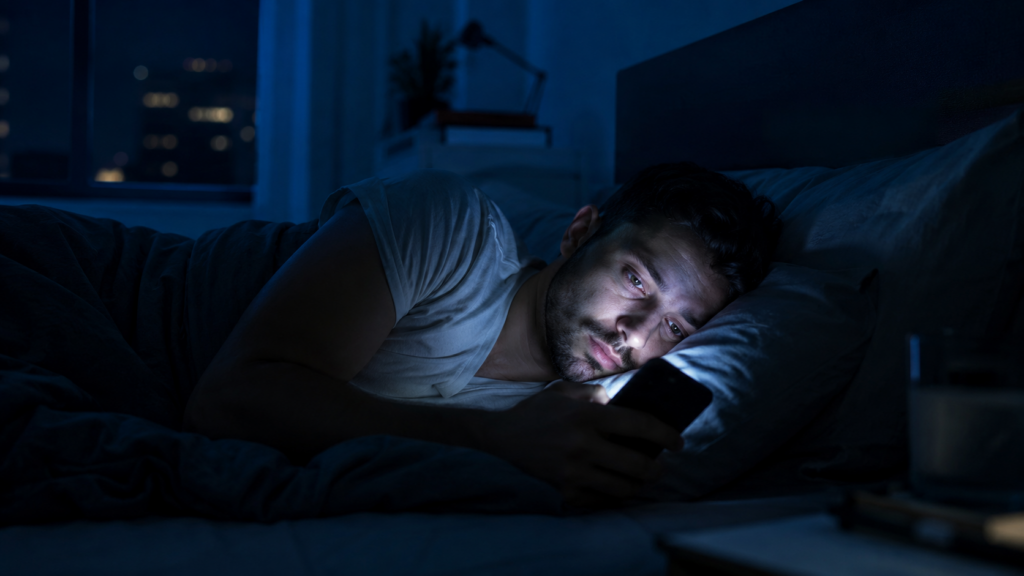
You’re getting seven, maybe eight hours of sleep. You’re in bed by midnight. You don’t drink coffee after 3pm. And yet — every single morning — you wake up feeling like you got hit by something slow-moving and heavy.
Here’s the part no one talks about: the number of hours you sleep is almost meaningless if the quality of that sleep is being quietly wrecked. And the most common night habits destroying your sleep aren’t dramatic. They’re boring, modern, completely normalized — which is exactly why they’re so damaging.
This isn’t about turning your bedroom into a Zen retreat. It’s about understanding what’s actually happening in your brain and body during those two to three hours before you close your eyes — and why that window matters far more than most people realize.
Your Brain Doesn’t Instantly Switch Into Sleep Mode
Most people treat sleep like an on/off switch. You get in bed, you close your eyes, eventually something clicks. But that’s not how the neuroscience works.
Sleep onset is a process, not a moment. Your brain needs to transition from a high-arousal, high-cortisol daytime state into a low-cortisol, low-temperature, melatonin-dominant state — and that transition takes time. Typically 60 to 90 minutes, sometimes longer if you’ve been doing things that keep your nervous system activated.
The problem? Most people’s evening routines are built to delay that transition as long as possible, without ever intending to. Bright lights, stimulating content, irregular meal timing, unresolved stress — each one sends a different biological signal that says: stay awake, stay alert, you’re not done yet.
What follows are five specific habits that are doing exactly that — and why your body can’t just override them with willpower.
1. The Evening Habits Destroying Your Sleep Quality
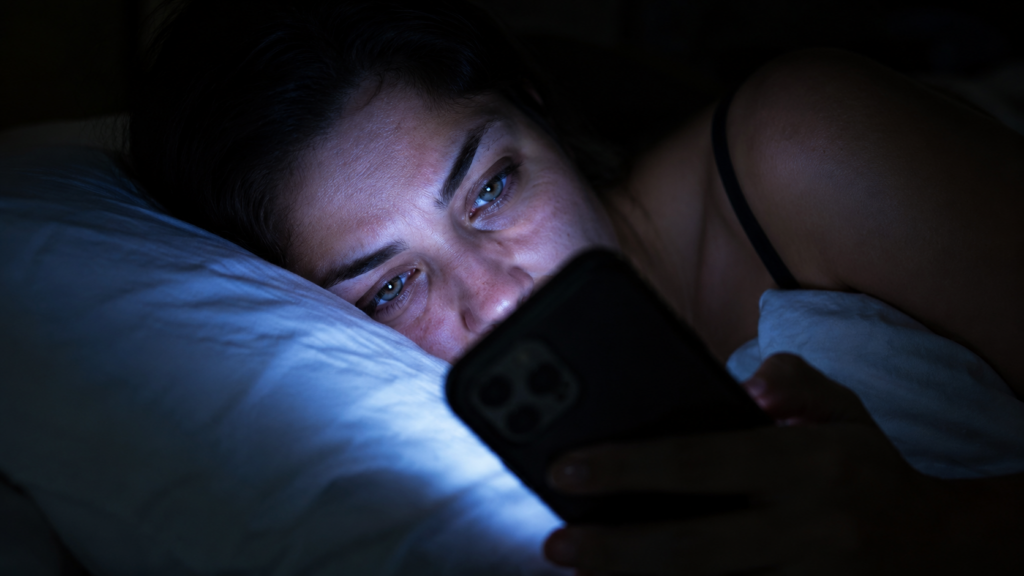
The logic feels reasonable enough: scroll until you feel sleepy, then put the phone down. But the biology runs in the opposite direction.
Dopamine doesn’t respect your bedtime. Every new post, notification, or video delivers a small hit of dopamine — the brain’s reward and novelty chemical. And unlike caffeine, which has a predictable half-life you can work around, dopamine stimulation is self-reinforcing. One scroll leads to another because your brain is perpetually expecting a slightly more interesting thing just below the current thing. The «endless» design of social feeds isn’t accidental.
Meanwhile, your phone screen — especially in the default brightness settings most people use at night — is emitting blue-wavelength light in the 450–490 nanometer range. That’s the same wavelength the brain uses to determine whether it’s daytime. When your eyes detect it, your suprachiasmatic nucleus (the brain’s master clock) suppresses melatonin production. According to research covered by the Sleep Foundation, even moderate blue light exposure at night can delay melatonin onset by 90 minutes or more.
Then there’s the emotional dimension. Doomscrolling through news, checking work Slack at 11pm, reading a thread that makes you vaguely angry — these all activate your amygdala. Your nervous system genuinely cannot distinguish between «mild annoyance at a tweet» and a mild threat. Both trigger a low-level cortisol response. Both push you further from sleep.
The result isn’t that you feel alert and can’t sleep. It’s subtler: you fall asleep, but your sleep architecture is disrupted. You get less time in slow-wave deep sleep and REM, your body temperature stays slightly elevated, and you’re more likely to experience micro-awakenings you won’t remember in the morning — which is exactly why you wake up feeling like nothing was restored.
What actually works:
Stopping scrolling before you feel tired, not after. Aim to put the phone down 45–60 minutes before bed. If complete abstinence sounds unrealistic, at minimum switch to night mode or use an orange-tinted screen filter, reduce brightness to the lowest comfortable setting, and stick to passive, low-stimulation content — not news, not social media, not anything that makes you feel something. A comfortable contoured sleep mask can help reduce those interruptions significantly.
Audiobooks and podcasts are genuinely better alternatives. They provide stimulation without blue light and tend to have lower emotional intensity than social feeds.
Comparison: What Each Evening Habit Does to Your Brain
| 🧠 Habit | ⚡ What It Does to Your Brain | ✅ Better Alternative |
|---|---|---|
|
📱 Social Media Scrolling
|
Dopamine loops, blue light exposure, and emotional stimulation can delay melatonin release and keep the brain alert. | Audiobooks, calm fiction podcasts, or relaxing music |
|
📺 Intense TV Before Bed
|
Narrative tension and bright screen exposure may sustain cortisol and mental activation late into the night. | Low-stimulation content with dim lighting and distance from the screen |
|
💼 Checking Work Messages
|
Reactivates planning and problem-solving systems, making it harder for the brain to transition into rest mode. | Write tomorrow’s priorities earlier in the evening and fully disconnect afterward |
|
📰 Reading Stressful News
|
Anxiety-provoking headlines and emotional outrage can stimulate the amygdala and increase mental arousal. | Reading a physical book, journaling, or light magazine content |
|
🎮 Competitive Gaming at Night
|
High stimulation, fast reactions, and headset immersion can spike adrenaline and delay relaxation. | Calm single-player games finished at least 90 minutes before bed |
2. Eating Too Late and Forcing Your Body to Digest While Sleeping
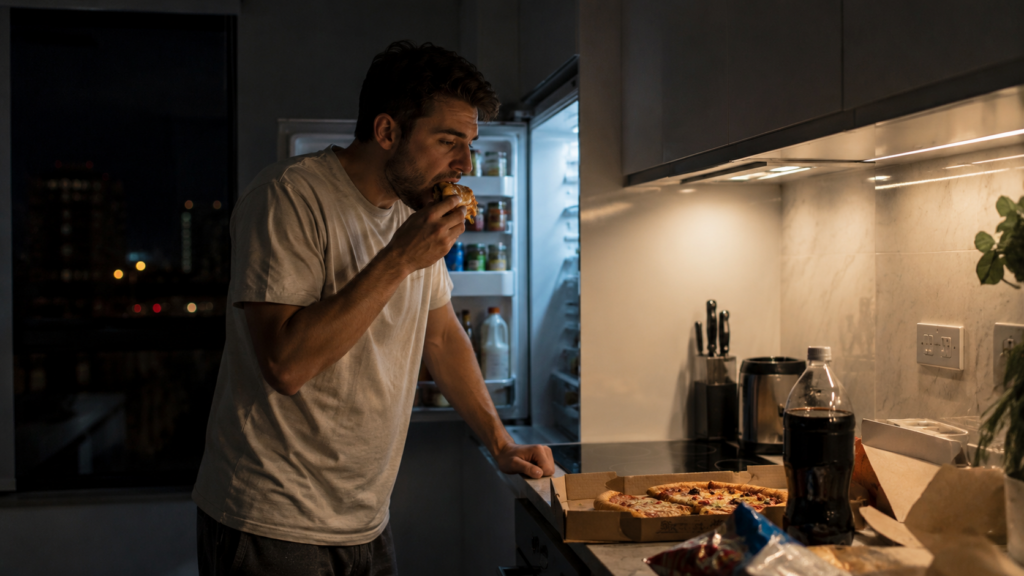
This one gets oversimplified constantly. «Don’t eat after 8pm» is not advice — it’s a rule stripped of all context. The real picture is more nuanced and more interesting.
Sleep is when your body drops its core temperature by 1–2°F, and that cooling process is one of the primary physiological triggers for entering deep, restorative sleep. Digestion generates heat. When you eat a large or heavy meal close to bed, your body is actively heating itself from the inside — directly opposing the cooling mechanism that needs to happen for quality sleep to begin.
On top of that, digestion is metabolically intensive. Your liver, stomach, and pancreas are processing glucose, managing insulin, and routing nutrients. That’s work. Your heart rate stays elevated. Your body’s priorities are clearly not rest.
The blood sugar issue is particularly underrated. A large carbohydrate-heavy meal — pasta, rice, pizza, a generous bowl of something — triggers an insulin spike followed by a drop. That drop, which typically happens 2–3 hours after eating, can be steep enough to cause mild hypoglycemia during the night. Your body responds to low blood sugar by releasing adrenaline and cortisol. You may not fully wake up, but you’ll often shift into lighter sleep stages, sometimes noticing fragmented dreams, mild anxiety, or feeling inexplicably alert at 3am.
Acid reflux adds another layer. Lying horizontal with a partially full stomach increases pressure on the lower esophageal sphincter. Even people who don’t consider themselves reflux sufferers can experience micro-episodes of acid movement that disrupt breathing, trigger brief wakings, and reduce deep sleep.
What to actually do:
The goal isn’t to stop eating in the evening. It’s about timing and composition. Aim to finish your last substantial meal 2–3 hours before bed. If you’re genuinely hungry late, a small snack that’s low-glycemic and protein-forward — a handful of nuts, some Greek yogurt, a slice of turkey — is far better than ignoring hunger (which also disrupts sleep) or raiding the pantry at 11pm for crackers and peanut butter by the tablespoon.
Alcohol deserves a mention here too. It makes you drowsy, yes — but it dramatically suppresses REM sleep and causes fragmented sleep in the second half of the night. That «great sleep» after a few drinks is largely the first phase. The back half is usually lighter, more disrupted, and often ends earlier than normal.
3. Carrying Stress Into Bed Without Realizing It
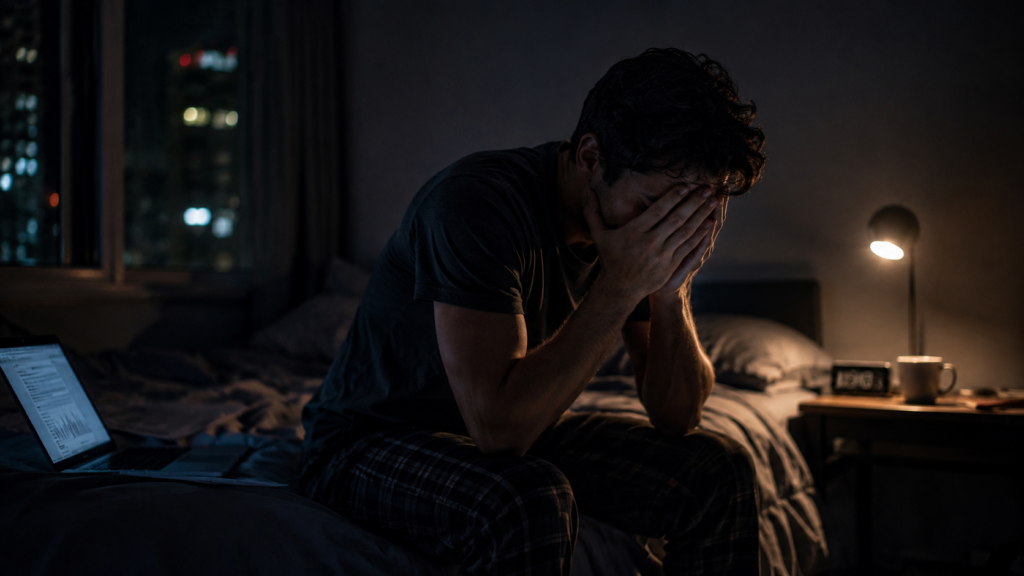
Most people don’t consciously decide to lie in bed and catastrophize. It just happens. The lights go out, the phone goes face-down, and suddenly the mental noise that was masked by activity all day has nowhere to go.
This is called cognitive hyperarousal, and it’s one of the most common and least discussed mechanisms behind chronic poor sleep. Your brain is still running background processes — unresolved conversations, tomorrow’s to-do list, things you said that you wish you hadn’t — and each of those threads carries a small but real physiological load.
Cortisol is the main player here. During the day, cortisol follows a natural rhythm: high in the morning, dropping throughout the day, reaching its lowest point around midnight. But stress — even the low-grade, ambient stress of a modern workday — interferes with that curve. Cortisol stays elevated longer, compressing the biological window in which your body is primed for deep sleep.
Your autonomic nervous system operates in two states: sympathetic (fight-or-flight, alert, active) and parasympathetic (rest, recovery, digestion). Most people walk around in a mild sympathetic state most of the day and never fully transition out of it in the evening. Going from an overstimulated day directly into bed doesn’t flip that switch — you need a transition.
Signs Your Nervous System Is Still «On» at Night
- Racing or repetitive thoughts that feel hard to stop
- Muscle tension in the jaw, shoulders, or chest you hadn’t noticed until you lay down
- Feeling tired but not sleepy — heavy body, alert mind
- Heart rate that feels slightly elevated even lying still
- Dread or low-level anxiety that doesn’t have a clear source
- Eyes that feel tired but keep opening
- Needing to check the phone «one more time» before sleep
The transition ritual concept:
What works isn’t a perfect routine — it’s a signal. Your nervous system responds to consistent cues. A 10-minute decompression practice doesn’t need to be meditation (though that helps). It can be as simple as making herbal tea and sitting without a screen, doing a brief body-scan or progressive muscle relaxation, writing down three things that are unresolved so your brain knows they’re «parked,» or taking a warm shower (which lowers core temperature as you step out — a direct sleep trigger).
The key is consistency. The same actions in the same order each night train your nervous system to begin the downshift earlier over time. According to Harvard Medical School’s sleep research division, behavioral interventions that address evening stress are among the most effective non-pharmacological treatments for insomnia.
4. Treating Bright Artificial Light Like It’s Midday
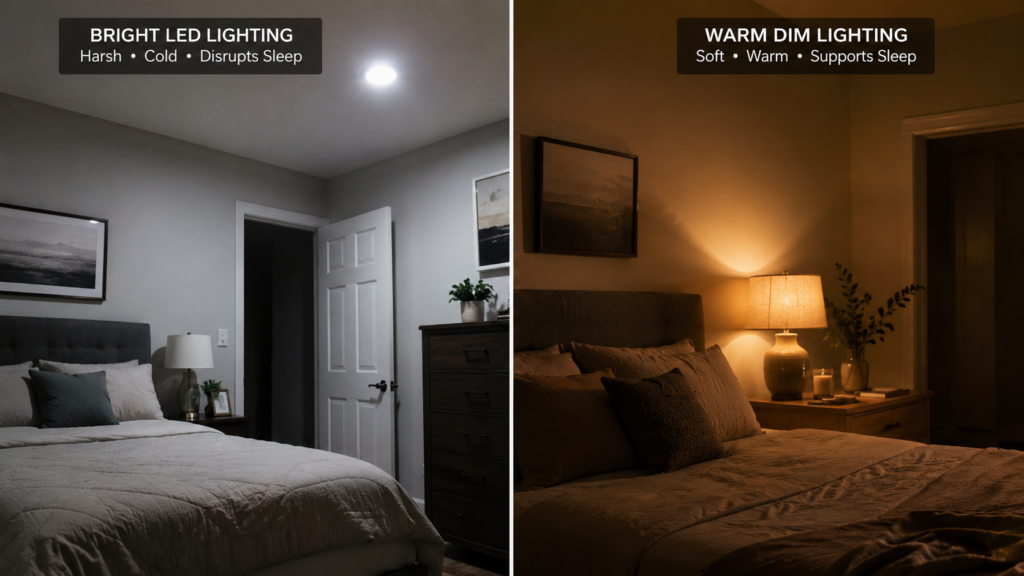
Modern homes are flooded with the wrong kind of light at the wrong time of day — and most people have no idea it’s happening.
Here’s the physiology: your body’s melatonin production is governed by light input through your retina. Specifically, specialized photoreceptors called intrinsically photosensitive retinal ganglion cells (ipRGCs) are exquisitely sensitive to short-wavelength blue light. In natural conditions, blue-rich light signals daytime; warm, dim light signals dusk. The moment those cells detect high-intensity blue light, they send signals to the suprachiasmatic nucleus to hold off on melatonin.
For some people, especially those with inconsistent sleep schedules or excessive nighttime screen exposure, low-dose melatonin supplements can sometimes help reinforce a more stable circadian rhythm. But timing matters more than people realize. Melatonin isn’t a sedative in the traditional sense — it’s a timing signal for the brain. Smaller doses taken 1–2 hours before bed are often more effective than the very high-dose products commonly marketed for sleep.
The problem isn’t just your phone. Your bathroom LED bulbs. Your overhead kitchen lights. Your television from across the room. Modern LED lighting is spectrally shifted toward the blue end compared to older incandescent bulbs — often by a significant margin. Sitting under bright overhead LED lights at 9pm is physiologically similar to telling your body it’s still afternoon.
Research published through the NIH has shown that light exposure above 10 lux in the blue range, for as little as 30 minutes in the evening, measurably delays melatonin onset. Most indoor environments in the evening are 100 to 300 lux or higher.
Practical adjustments that actually work:
You don’t need to sit in candlelight. The goal is reducing blue light intensity after sunset.
- Switch overhead lights in living and bedroom areas to warm-toned bulbs (2700K or lower). This is a one-time purchase that has lasting impact.
- Use floor lamps or table lamps in the evening instead of overhead lights — the lower angle reduces the amount of light entering your eyes directly.
- Enable «Night Shift» (iOS) or «Night Light» (Android) on your phone, set to the warmest tone available and scheduled to come on at sunset.
- If you wear glasses, blue-light filtering lenses for evening use are worth considering — they’re not a cure-all but reduce total blue light exposure meaningfully.
- Dim TV screens significantly for evening viewing. The default factory brightness on most TVs is calibrated for showroom conditions, not dark bedrooms.
One underrated habit: getting bright, natural light exposure in the morning. Morning sunlight anchors your circadian rhythm earlier, which means your melatonin onset naturally shifts earlier in the evening. Fifteen minutes of outdoor light in the morning does more for evening melatonin production than almost any supplement.
5. Sleeping at Completely Different Times Every Night
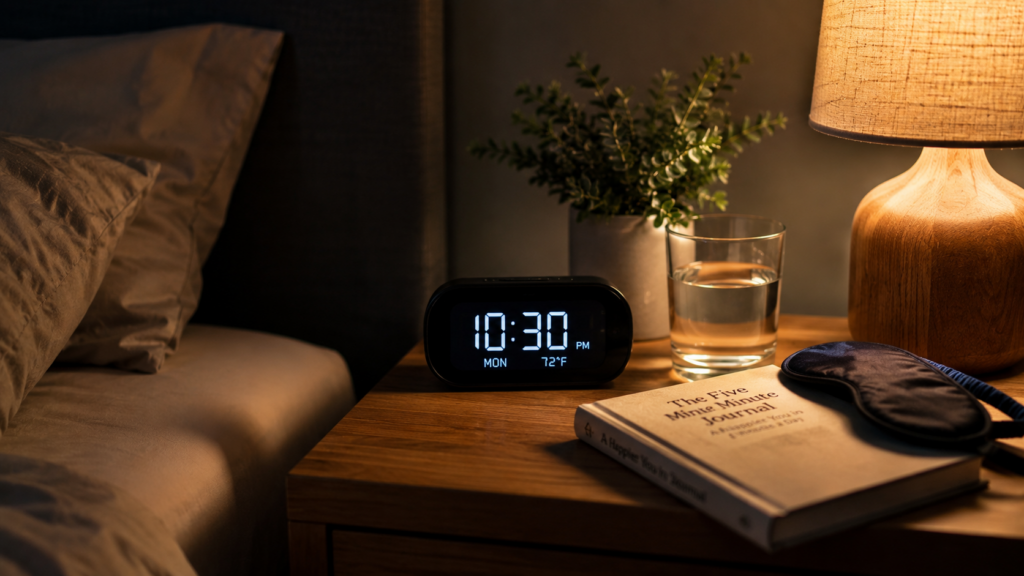
If there’s one habit that undermines sleep more systematically than anything else, it’s this one — and it barely gets mentioned in mainstream sleep advice.
Your circadian rhythm is a biological clock. It’s not metaphorical. Your body runs on a roughly 24-hour cycle regulated by light, temperature, and — critically — consistent timing. When you sleep and wake at the same time every day, your body learns to pre-warm, pre-cool, and pre-release hormones on schedule. Cortisol starts rising about an hour before your typical wake time. Melatonin starts rising several hours before your typical sleep time. Sleep pressure builds predictably.
When you vary your sleep and wake times by two or more hours day to day, all of that falls apart.
Tuesday midnight, Thursday 1am, Friday 2am, Saturday 3am, Sunday a hopeful 10pm — this is what most people’s schedules actually look like. Each shift moves your circadian anchor point. Your body is perpetually catching up and never quite getting there. Researchers at the University of Pittsburgh found that irregular sleep patterns were associated with lower sleep quality, more daytime sleepiness, and worse mood — independent of total sleep duration. You can log the same number of hours and still feel the difference.
The weekend problem is real. Sleeping in on Saturday and Sunday feels like recovery, but it’s actually closer to self-induced jet lag — sometimes called «social jet lag.» Going to bed at 2am on Saturday and waking at 10am shifts your body clock back by two hours. Come Sunday night, you can’t fall asleep at midnight. Monday morning is brutal not because you’re lazy, but because your melatonin onset is now happening at 2am — and you’re waking at 7am, which is 5 hours later for your biology.
Making consistency work in real life:
The most important anchor is your wake time, not your bedtime. Wake up at the same time every morning — weekdays and weekends — and your sleep drive will naturally regulate your bedtime within a few weeks. You don’t have to hit a perfect bedtime every night; prioritize the wake time first.
If you must sleep later on weekends, try to limit the difference to 45 minutes to an hour. More than that starts to compound.
Strategic morning light again: consistent early light exposure is one of the most effective tools for anchoring your circadian clock. It’s free, it works, and it takes fifteen minutes.
The Real Problem Isn’t One Bad Night
Sleep debt is cumulative, and so is recovery. Consistently disrupting your sleep architecture — night after night, through normalized habits you barely notice — creates a deficit that accumulates over weeks and months. You adapt to feeling suboptimal. You forget what actually rested feels like.
The good news is that the biology runs in both directions. Consistent improvements compound too. A week of better sleep timing, dimmer evening lights, and an earlier phone cutoff will often produce noticeable changes — not immediately, but within days. Your circadian rhythm responds to behavioral signals. Give it better ones, consistently, and it recalibrates.
None of these changes require a perfect routine or a sleep-optimized bedroom or a $400 mattress topper. They require understanding what’s actually happening in your body after dark — and making a few targeted decisions based on that understanding rather than guesswork.
FAQ: Your Sleep Questions, Actually Answered
Why do I wake up tired even after 8 hours of sleep?
Duration and quality are different things. Eight hours of fragmented, light, or poorly timed sleep doesn’t produce the same recovery as six hours of deep, uninterrupted, properly timed sleep. Most of the habits described in this article disrupt sleep architecture — the balance of sleep stages — rather than sleep duration. If you’re waking up unrefreshed consistently, the issue is almost certainly quality, not quantity.
Is using your phone before bed really that bad?
Yes, but not just for the reason most people think. It’s not only the blue light — it’s the combination of blue light, dopamine stimulation from novel content, and emotional activation. All three independently push back sleep onset and reduce sleep quality. The blue light filter on your phone helps with one of three problems.
What is the worst habit for sleep quality?
Inconsistent sleep timing is probably the most underrated sleep disruptor — worse in many ways than phone use, because it destabilizes the entire hormonal and neurological foundation of sleep. Most people focus on what happens in bed, but the circadian rhythm is built over weeks of behavioral consistency, and one irregular weekend can shift it meaningfully.
Can stress ruin sleep even if I fall asleep fast?
Absolutely. Falling asleep fast isn’t the same as sleeping well. If your cortisol is elevated, your nervous system may allow you to lose consciousness but still suppress deep slow-wave sleep and fragment your REM cycles. The result is a full night in bed that produces half the recovery. This is why people often report vivid, anxious dreams and early morning awakenings during stressful periods — the sleep architecture is disrupted even when sleep onset is normal.
Does eating late at night affect deep sleep?
Yes, through multiple mechanisms. Digestion raises core temperature (opposing the cooling required for deep sleep), blood sugar fluctuations trigger stress hormones in the middle of the night, and large meals increase the risk of acid reflux in horizontal positions. The type of food matters too — high-glycemic, high-fat meals are more disruptive than small, protein-forward snacks.
*Disclosure: Some of the links on this site are affiliate links. This means that if you choose to make a purchase through them, we may earn a small commission at no additional cost to you. We only recommend products or tools that are relevant to the content and that we believe can provide value. This helps support the site and allows us to continue creating useful, free content.